
Covid-19 weekly round-up: US job losses raise concern but France and China continued to add new solar
Cell supply shortages could kick-start manufacturing activity in India, EV car sales are braced for a fall while still gaining market share and a new date has been set for the world’s biggest solar trade show.
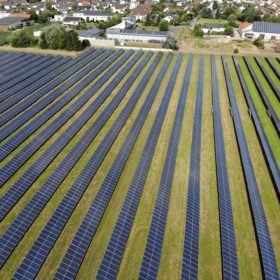
France added 176 MW of solar in first three months of the year
Quarterly new additions were 15% lower than in the October-to-December window. The France Territoire Solaire thinktank said the lower volumes could be explained by the initial impact of the coronavirus crisis.

China added almost 4 GW of solar in first quarter despite Covid-19
The world’s solar superpower saw the amount of new capacity added in the first three months of the year fall 24% from the same period of 2019 as 1.75 TWh of solar electricity was curtailed, but the National Energy Administration expects both statistics to improve as China exits the public health crisis.
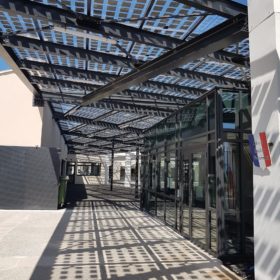
BIPV solar modules with varying transparency
German panel maker Sonnenstromfabrik has developed a glass-glass monocrystalline PV module in three versions offering different levels of transparency. The company says the transparency feature makes the panels suitable for verandas, pergolas, awnings, carports, swimming pools, halls and facades. Their power output varies from 160 W to 280 W, while their efficiency ranges from 9.5% to 16.7%.

University of Queensland’s Tesla battery paying for itself
The University of Queensland has released a performance report on the Tesla Powerpack it installed in December 2019. Across a range of revenue streams, the Powerpack is already earning the university some serious cash.

Zimbabwe launches smart-meter-led net metering and 500 MW solar tender
Utility the Zimbabwe Electricity Distribution Company has offered solar power system-owning customers the chance to operate under new net metering rules. The state-owned utility has also started tendering for a total 500 MW of solar generation capacity, according to Reuters.
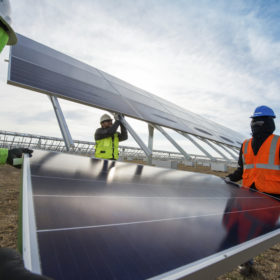
SunPower sells off its O&M business, gets regulatory approval for Maxeon spinoff
SunPower has had to make fundamental changes to continue to be relevant in a solar industry very different from that of its roots. The company aims to become an energy service provider and is leaving low-cost manufacturing to its Chinese partner.
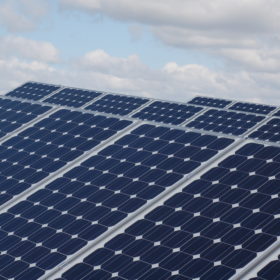
Australia’s rooftop PV juggernaut displaces fossil fuel generators
The unstoppable growth of Australia’s rooftop PV fleet continues to eat into the pie previously reserved for coal and gas, a new audit of the National Electricity Market shows. Meanwhile, the nation’s electricity consumption has remained mostly flat despite the economic slowdown triggered by the Covid-19 pandemic.

Covid-19 weekly briefing: US residents ponder solar during lockdown, Aussie installers wonder what might have been and the Indian EV industry calls for help
Plus, Italian developers continue to dig deep for their health service, the pandemic piles on problems for a debt-saddled Chinese company and analysts consider whether there will be any money left for a green economic recovery after the dust settles.
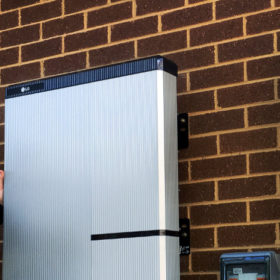
People in quarantine in the United States are searching for solar power
New data from The Harris Poll and LG show that LG’s solar web traffic, as well as quote requests for residential systems are both trending high since the onset of the Covid-19 pandemic. Now, the issue becomes turning this interest into concrete sales.
