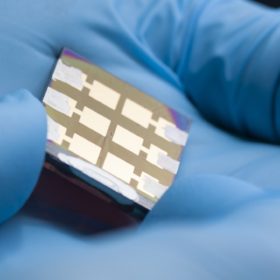
Lead halide perovskite cell based on benzodithiophene cation achieves 14.7% efficiency
Swiss researchers sought for the first time to replace phenylethylammonium (PEA) with benzodithiophene (BDT) in cations for perovskite cells. The latter showed improved stability and ensured a power conversion efficiency that was 1% higher than that of its counterpart.
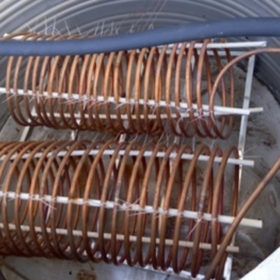
PV-driven air conditioner coupled with ice thermal storage
Researchers in China have built a PV-powered air conditioner that can store power through ice thermal storage. The performance of the system was evaluated considering operating efficiency and stability and the scientists found that a device relying on a variable-speed compressor and an MPPT controller showed very good ice-making capability.
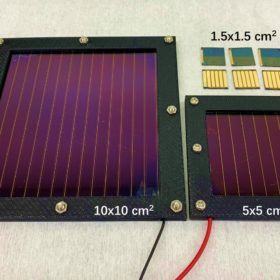
New perovskite material for 23.5%-efficient solar cell
Researchers in Japan have found a new way to fabricate one of the most promising perovskite materials for PV application — the α-formamidinium lead iodide known as α-FAPbI3. With a pre-synthesized version of this material, they were able to produce a cell with a power conversion efficiency of 23.5% and a lifespan of more than 2,000 hours.
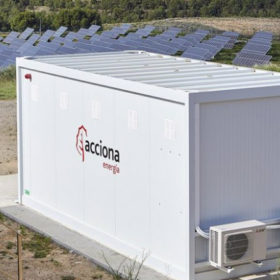
Storing solar power with recycled batteries from Nissan
Acciona is testing four second-life batteries with a combined capacity of 130 kWh at its 1.2 MW experimental solar park in Tudela, in the Spanish region of Navarra.

Solar energy collectors… grown from seeds!
Rice University engineers produced “near-perfect” 2D perovskite crystals for photovoltaic applications, grown from seeds.
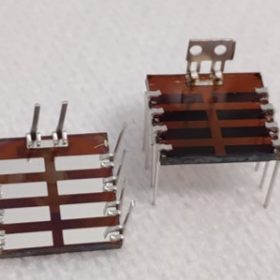
Black perovskite solar cell with 15% efficiency via thermal evaporation
The cell exhibited an open-circuit voltage of 1.1 V and was able to retain around 90% of its initial performance after 215 days of exposure to dim light at room temperature. According to its creators, this performance and the notable stability were ensured by the thermal evaporation technique used for depositing the perovskite layers onto the cell.

Flexible perovskite solar module with 10.5% efficiency
The methylammonium-free inverted solar module was built on a flexible substrate made of polyethylene terephthalate (PET). A hole transporting material made of poly(triarylamine) (PTAA) and a double-cation cesium formamidinium (CsFA) perovskite layer were deposited through blade-coating and nitrogen-assisted blade-coating.
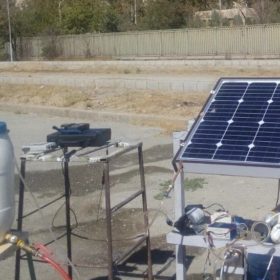
Stand-alone brackish water desalination system powered by photovoltaic-thermal unit
The BWRO unit, which has a treated water production capacity of around 11.80 L/h, was built with a pre-filtration module, a high-pressure DC pump, an RO module, and a post-treatment module. The PVT system was designed to meet the energy requirement of a high-pressure DC pump and a diaphragm-type circulation pump utilized to circulate soft water beneath the PV module for the active cooling of the panel itself.

Saule Technologies opens perovskite solar cell factory in Poland
The Polish perovskite solar cell specialist claims to be the first company in the world to have commissioned commercial production of the technology.

Is large scale solar ready for the North Pole?
Norwegian researchers have conducted a study to assess the technical feasibility of solar parks in polar regions. They found out that snowdrifts may be a major issue but they also believe that snow accumulation can be reduced through snow fences and proper system design.
