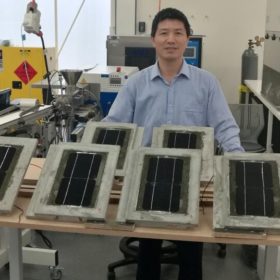
Solar tile with passive cooling
Researchers built the device by attaching 17%-efficient monocrystalline PV cells to a mortar roof tile that was doped with a phase-change material (PCM). The PCM solar tile provided 4.1% more power than the PV tile with no cooling agent in the winter, and 2.2% to 4.3% more during the summer.
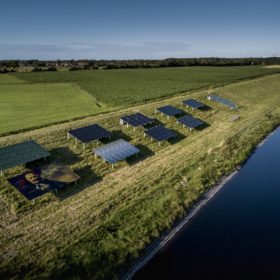
Challenging plans to deploy PV on dikes
Dutch researchers are trying to determine whether large-scale PV projects can be deployed on flood-control dikes across the Netherlands. A 5 MW solar project has already been built on a dike near Groningen, but the researchers believe there is potential to build up to 2.9 GW of PV on such embankments.
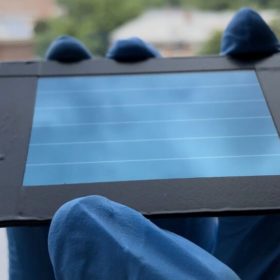
‘Spontaneous de-doping’ for 17.8%-efficient perovskite mini-module
U.S. scientists have found a new ‘de-doping’ process in perovskite solar cells that could cut production costs and produce better devices. They have used this to fabricate a mini-module with 17.8% efficiency.
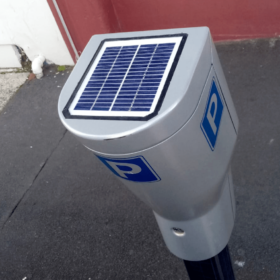
Solar for parking machines
New Zealand researchers have proposed a way to assess the technical and economic feasibility of PV-powered parking machines. Solar might be an ideal solution, but the siting of the machines is critical and should be planned in advance, in line with available solar radiation and potential shading.

CPV panels for agrivoltaics
Swiss startup Insolight has raised €4.6 million to bring its concentrating PV module technology to commercial production. The panels have a claimed efficiency of 30% and power output of 160 W. Originally conceived for rootop solar, the product is now being recommended as an interesting option for agrivoltaic projects.
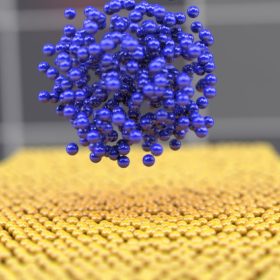
Amorphous lithium discovery could lead to new high-performance batteries
Researchers have set out to study the kinetics of lithium deposition during cycling in a battery. By changing different parameters, they’ve found that it’s fairly easy to put lithium into amorphous form, which is superior on an electromechanical level.
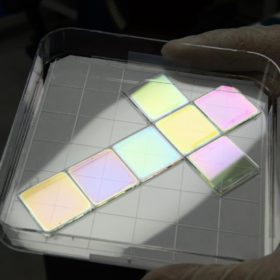
Cadmium-free CIGS solar cell with 18% efficiency
South Korean scientists manufactured the cell with the chemical bath deposition method, using different thiourea concentrations. For the buffer layer, they used zinc instead of cadmium sulfide. The cell is flexible and is available in seven different colors.
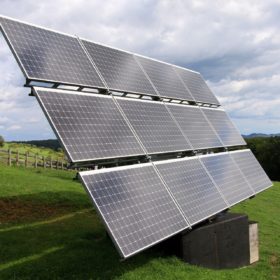
Fuzzy logic MPPT to improve PV system performance
A Pakistani-Chinese research group has demonstrated a new maximum power point tracking method, based on a fuzzy logic algorithm to provide faster results. The converter tech is claimed to have an impact on PV system efficiency and provide isolation between the load and the PV array.
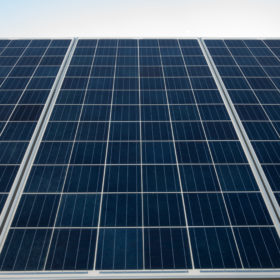
Temperature-based MPPT algorithm to improve PV system efficiency
Researchers in Spain have developed a maximum power point tracking (MPPT) algorithm based on just one input parameter – PV module temperature. The algorithm has already shown stability in testing, the scientists claim.

How much vertical BIPV is too much?
A French-Italian research group has shown that BIPV facades on buildings can cause a ‘darkening’ effect by reducing light reflectance on nearby installations, dragging down energy production by 11%. The ‘urban heat island effect’ can also weigh on PV system performance, the researchers said.
