
Solinteg releases new hybrid inverter series
The M2HT series has an output range of 75–125 kW and is the company’s first product in the 125 kW power class.
How to reduce ionic losses in tin-based perovskite solar cells
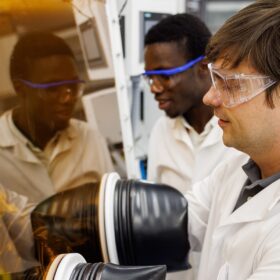
Researchers in Germany have developed a DMSO-free fabrication process for tin-based perovskite solar cells that dramatically reduces ion density – over tenfold lower than in lead-based devices – leading to improved stability.

The thermomechanical impact of plated copper contacts on heterojunction solar cells
UNSW researchers have found that annealing copper-plated contacts in heterojunction solar cells creates only localized stress. Their analysis also showed that, at typical annealing temperatures around 200 C, the probability of silicon fracture is very low.

Solar powers the warfighter
2026 Defense authorizations highlight the need for U.S.-made photovoltaics in satellites to compete with foreign adversaries, writes Rob Gardner, vice president, congressional and regulatory affairs, for the SEMA Coalition.
Perovskite-silicon tandem solar cell with steric complementary design achieves 32.3% efficiency
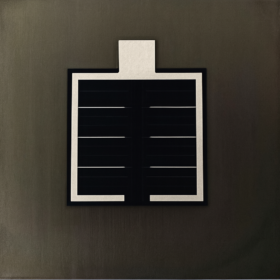
Researchers in China developed a monolithic perovskite-silicon tandem solar cell using a steric-complementary interface design, achieving a certified efficiency of 32.12% and enhanced long-term stability. This strategy optimizes molecular fit in the perovskite lattice, improving both charge transport and device longevity.
TNO offers mass customization line for integrated PV applications
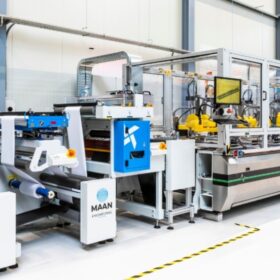
The Dutch research institute’s highly automated research line offers customized, flexible solar semi-finished PV products to partners developing integrated PV applications.
How the world’s sunniest region tackles solar module soiling, cleaning
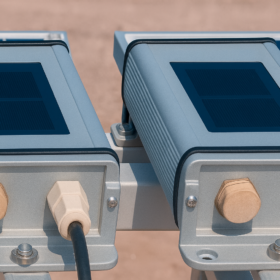
Researchers studying PV panels in Chile’s hyper-arid Atacama Desert found that cemented soiling can cause annual energy losses of up to 9.8%. Their combined field and laboratory work shows that dry cleaning leaves residue that accelerates future cementation, making wet cleaning the more effective long-term strategy despite higher costs and scarce water.
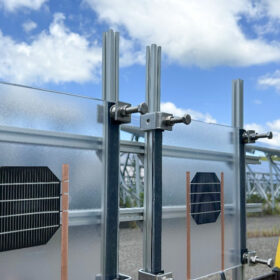
Perovskite solar testing field commissioned in Japan
Kanazawa University has begun long-term outdoor testing of tandem perovskite solar cells in collaboration with Toshiba. The research project aligns with Japan’s broader push to scale perovskite PV technologies toward large deployment by 2040.

Agrivoltaics for biomethane
Researchers in Italy have simulated an agrivoltaic-powered anaerobic digestion plant for biomethane production and optimized it across eight scenarios, using vertically mounted panels in some cases with one-axis tracker and with two-axis trackers in others.
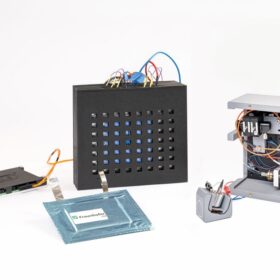
World’s first high-power aluminum-ion battery system for energy storage
For the first time, a complete aluminum-graphite-dual-ion battery system has been built and tested, showing that lithium-free, high-power batteries can deliver stability, fast response, and recyclability for next-generation grid applications.
