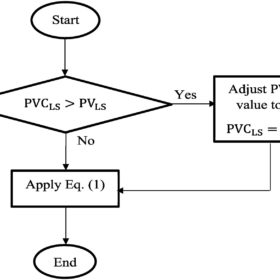
The PV cooler lifespan effectiveness factor
Researchers in Malaysia have defined a new parameter to evaluate solar module cooling techniques based on their lifespan effectiveness. They warned that the proposed methodology should be utilized only with standard test conditions, a temperature of 25 C, and a reference PV system without the cooling system.
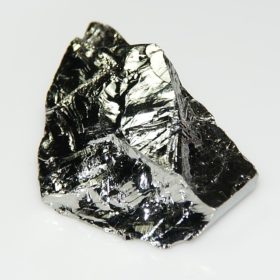
III–V solar cell based on spalled germanium substrate achieves 23.36% efficiency
US scientists used spalled germanium instead of gallium arsenide, as the former reportedly reduces several issues associated with GaAs spalling. The cell achieved an open-circuit voltage of 1.019 V, a short-circuit current density of 28.49 mA cm−2, and a fill factor of 80.45%.
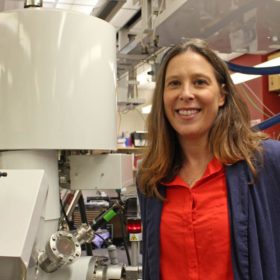
Perovskite solar cell defect characterization during manufacture for improved stability
A novel electrochemical robotic arm is under development at the University of Arizona to identify perovskite defects during manufacturing rather than after to improve durability.

Chinese PV Industry Brief: GCL Tech starts production at polysilicon fab in Leshan, Jolywood expands backsheet capacity
In other news, Shuangliang secured a large wafer deal from the Chint Group and Tongwei raised the prices of its solar cells.
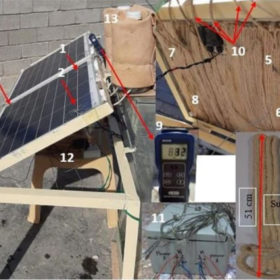
Cooling down solar modules with cotton wicks immersed in water
The novel technique consists of attaching cotton wicks immersed in the water (CWIWs) to the backside photovoltaic module. The water is supplied to cotton wicks from top to bottom by gravity which the scientists said helps the effective absorption of cotton and reduces water consumption.

Vehicle-integrated photovoltaics for low-speed electric vehicles
Canadian startup Capsolar claims its flexible solar modules can be adapted to any type of low-speed electric vehicle with no extra modification and custom work. The panels have an efficiency of 21.3%.

Peel-off patterning technique to create stable semitransparent solar cells for window applications
The cells are intended to be built inside panes of window glass, turning passive buildings into active energy producers. A key hurdle was creating the micron-scale electrical connections between individual cells that comprise a solar module.
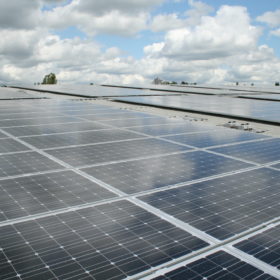
Belgium’s Flanders region wants to retroactively cancel green certificates for large PV systems
The retroactive measure should affect PV systems totaling more than 500 MW. The Flemish government claims the cancellation of the green certificates may help save up to €1.2 million, while the local renewable energy association ODE Vlaanderen is ready to question the legal underpinning of the draft law.

New kind of black silicon shows improved light-trapping properties
Scientists in Russia have developed a new wide-band optical absorber called ‘black silicide’ which they claim is more adjusted to match AM-1.5 solar spectrum with theoretically higher photogenerated current density. It could be used for tandem operation in photovoltaic devices.
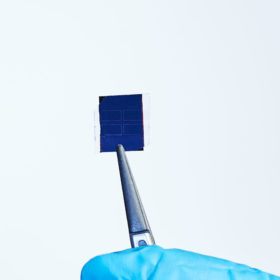
Monolithic perovskite-silicon solar cell with 20% efficiency via new lamination approach
The solar cell achieved an open-circuit voltage of 1.75 V, a short-circuit current density of 15.5 mA cm−2, and a fill factor of 73.6%. It was also able to retain 93% of its initial efficiency after 100 hours at a temperature of 80 C.
