
Chinese PV Industry Brief: Trina shipped 10.5 GW of modules in H1
Moreover, the Chint group said its PV plant fleet in China has reached a combined capacity of 6.54 GW and project developer China Shuifa Singyes said high polysilicon prices and Covid restrictions had caused a revenue drop.
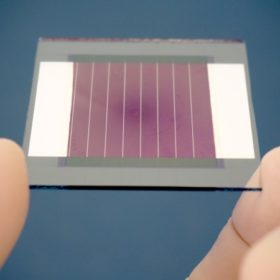
Mini organic solar module with 13.94% efficiency
The panel is based on 14.9%-efficient organic PV cells with a surface of 1.1 cm2 that the same research group unveiled in September 2020. The solar cells were interconnected using laser structuring.
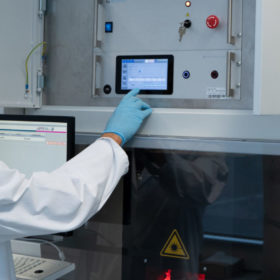
Fraunhofer CSP develops repair process for PERC solar cells
The performance of the solar cell contacts can be improved with laser-assisted current treatment. The process does not damage the solar cells but only optimizes faulty semiconductor-metal contacts.
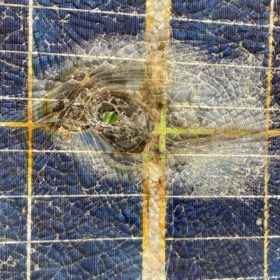
Increasing volumes for PV module recycling in Brazil
Brazilan PV module recycling specialist SunR has already recycled 30 tons of panels and expects to receive another 125 tons. According to its CEO, demand for recycled panels, especially broken panels, has increased considerably in recent years.
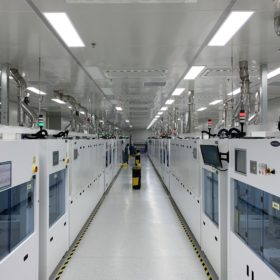
Jetion Solar setting up 5 GW heterojunction PV module factory in China
Construction on the new factory is scheduled to begin by the end of the year and manufacturing activities should begin in 2023.
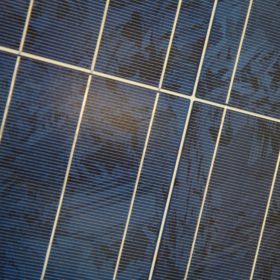
Cooling solar panels with thermoelectric modules
The cooling system was made with an aluminum heat sink and a thermoelectric module. The solar panel is cooled exclusively by the thermoelectric device, which is, in turn, cooled down by the heat sink via free convection. According to the scientists that developed the technique, it was able to reduce panel operating temperature by about 10 degrees Celsius.
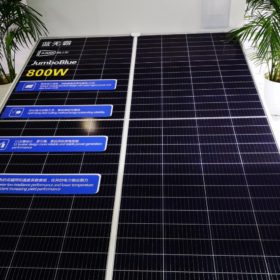
Chinese PV Industry Brief: Shandong province wants to deploy another 35 GW of PV over the next five years
In addition, JA Solar was able to ship 10 GW of modules in the first six months of the year and raise RMB5 billion for new production capacity.
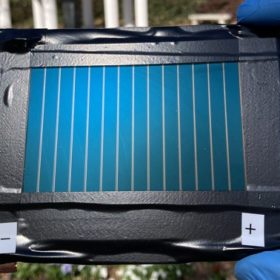
Mini perovskite solar module with 19.2% efficiency via new additive
The efficiency of the module was certified by the U.S.’ National Renewable Energy Laboratory. It was built with perovskite solar cells with a stabilized efficiency of 23.6%, an open-circuit voltage of 1.17 V, a short-circuit current density of 24.1 mA per cm−2, and a fill factor of 0.842.
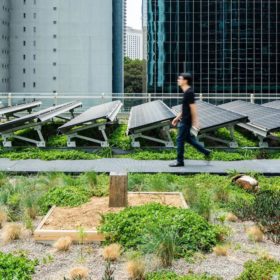
Green roof improves solar panel efficiency by 3.6% on average
The comparison of two solar cladded roofs in Sydney, Australia, one bare beneath its panels and the other adorned with native grasses and plants, has found the panels on the green roof were, on average, 3.63% more efficient, producing an average daily output 13% greater than the conventional roof. The improvements are believed to stem from the lower temperatures on the green roof, thanks to its plants – which also provided a plethora of additional benefits.
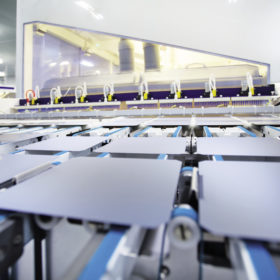
Chinese PV Industry Brief: Longi raises PV wafer prices, new entrant switches on 15 GW of wafer capacity
GokinSolar has commissioned the first 15 GW unit of its 50 GW PV wafer manufacturing facility in Zhuhai City, Guangdong Province and Golden Solar New Energy Technology last week announced commercial production plans for the flexible, lightweight, cast-mono, heterojuntion (HJT) solar modules. Meanwhile, Longi has raised the prices of its wafers.
