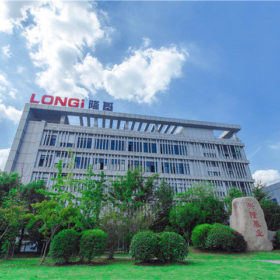
Chinese PV Industry Brief: Polysilicon and wafer prices keep increasing
Longi has raised its wafer prices for June and the China Nonferrous Metals Association has reported this week that polysilicon reached a price of RMB200-210 per kg, and that the highest price exceeded RMB230 per kg.

Solar catamaran 100% powered by heterojunction modules
The 100% solar-powered boat will be tested in a 9,000 nautical mile expedition from Chile to Australia that is set to start in December. The vessel is equipped with an 11 kW PV system built with heterojunction modules provided by Russian manufacturer Hevel Solar.

Methylammonium-free perovskite solar cell with slot-die coating, 18% efficiency
Researchers have developed a slot-die coated solar cell with an ‘n-i-p’ layout and a fluorine-doped tin oxide substrate, a tin oxide layer, a perovskite film, and a hole-blocking layer. It has an efficiency of 18.03%, an open-circuit voltage of 1024 mV, and a short-circuit current density of 22.4 mA cm−2.
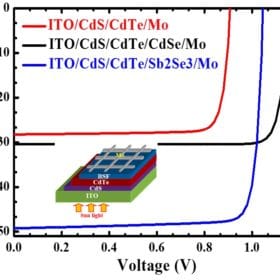
CdTe heterojunction solar cells based on antimony selenide back surface field layers
An international research group is seeking to increase the efficiency of heterojunction cadmium-telluride solar cells by applying back surface field (BSF) layers made of antimony selenide. It claims the addition of this compound may raise CdTe cell efficiency by around 9% and has the technical potential to reach efficiencies over 40%.
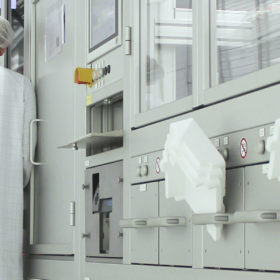
Valoe announces IBC solar cell order for specialist applications
Czech specialist module manufacturer Fill Factory has signed up to take €500,000 worth of Valoe’s inter-digitated back contact cells under a one-year supply contract.
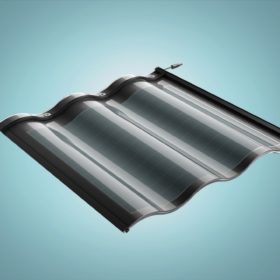
Canadian BIPV module supplier unveils two solar tiles
Both products are based on 22%-efficient CIGS solar cells and are manufactured in Asia. One of the two devices has a flat design and power output of 80 W and a second product features a nominal power of 30 W and an undulating design.

Using excess heat from PV modules for lithium-extraction process
Canada-based Enertopia filed provisional patents for technology that it said could boost PV system output by 10% or more and reduce panel heat stress.

Applications open for Indian solar manufacturing incentive scheme
Companies can apply for incentives to set up gigawatt-scale solar factories in India. Applications can be submitted until June 30 and the list of successful recipients will be announced on July 26, with letters of award to be issued four days later.
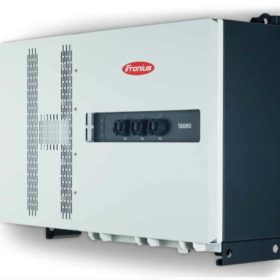
Fronius launches new inverter for large-scale PV plants
The 50 kW version of the new inverter features an efficiency of 98.6% and a European efficiency of 98.1%. It can be deployed with a decentralized approach, next to the PV modules, or centralized, at the grid connection point.
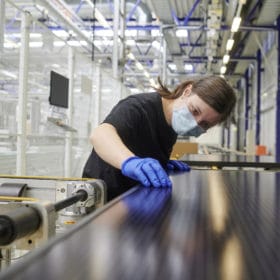
Meyer Burger begins manufacturing activities at 400 MW module factory in Germany
The Swiss manufacturer opened its module factory in Freiberg a few days after having begun manufacturing activities at its 400 MW cell factory in Thalheim.
