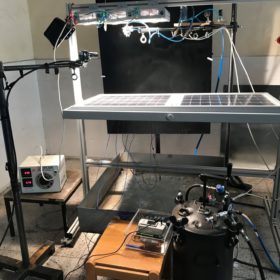
Air-assisted water spray for PV module cooling
Turkish researchers have developed a cooling technique in which water is sprayed via an air-assisted external mixing flat fan nozzle. The system can produce smaller droplet sizes to ensure the even distribution of water on panels.
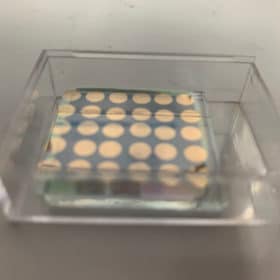
Future of cadmium telluride PV tech
In the third interview of a series, pv magazine spoke to Prof. Arvind Shah of École polytechnique fédérale de Lausanne and Associate Prof. Alessandro Romeo from the University of Verona about the challenges and opportunities of cadmium telluride (CdTe) PV tech. They said there is still potential to ramp up efficiency and cut costs, and claimed that the toxicity of cadmium should not be seen as a serious concern.
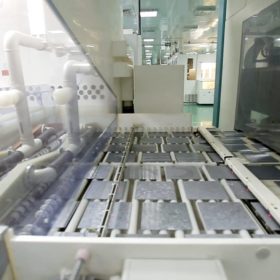
Indian incentives to support up to 13% of 240 GW of panel demand by fiscal 2030
India is targeting 280 GW of solar by 2030, of which 240 GW has yet to be built, but India Ratings says the country’s production-linked incentives will only cover up to 13% of future deployments.

US shingled module maker to move production out of Asia
GAF Energy has announced plans to set up a new manufacturing facility in California. It currently produces BIPV panels in South Korea.

Chinese PV Industry Brief: Zhonghuan raises wafer prices as president calls for faster action on emissions
Henan province immediately responded with a plan to deploy another 20 GW of solar and wind by 2025.

Exeger ramps up dye-sensitized solar cell production in Sweden
The Swedish company secured $38 million to build a manufacturing facility it has planned with the support of Swiss conglomerate ABB. The factory will be located in Stockholm and produce the company’s Powerfoyle products.
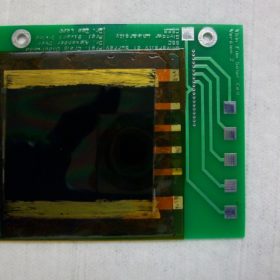
Cadmium telluride solar cells for space applications, BIPV, unmanned aircraft
U.K. researchers have developed a flexible thin-film cadmium telluride (CdTe) solar cell for use in ultra-thin glass for space applications.
Perovskites stick together for better performance
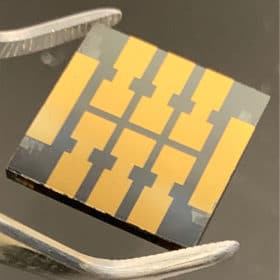
Scientists in the U.S. demonstrated an additive that acts as a “molecular glue” within a perovskite solar cell. Treating the cells with this self-assembled monolayer material was shown to greatly improve their long-term performance, whilst also providing a boost to conversion efficiency. And the scientists further point out that the treatment relies on simple processing and readily available materials – good signs for its applicability in manufacturing.
Organic solar for optical wireless data receivers
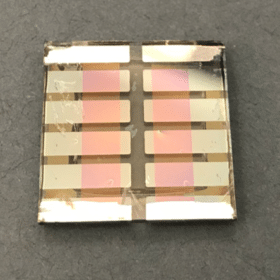
Researchers in the United Kingdom have built a 14%-efficient organic PV device that can be used in high-speed optical wireless communication systems. The cell consists of a 4×2.5mm photoactive layer fabricated with a bulk heterojunction of a polymer donor and fullerene and non-fullerene acceptors.

Chinese PV Industry Brief: Tongwei raises cell prices, Longi joins forces with Engie
The Chint Group has also said it was China’s largest PV plant owner at the end of 2020 with more than 5.7 GW in operation.
