
China made 14 GW of solar modules in June – and more than 80 GW in six months
The nation produced 57% more solar cells in the first half of this year than in the same period a year earlier, according to a financial update from state-controlled manufacturer Luoyang Glass.

First Solar breaks ground on 3.3 GW module factory
First Solar has started building a new PV module factory in the U.S. state of Ohio. The $680 million facility is scheduled to start operations in the first half of 2023.

Chinese PV Industry Brief: Work begins on 12 GW heterojunction module factory in Zhejiang
Furthermore, Zhonghuan Semiconductor’s parent company has reported strong results for its PV business and solar developer Shunfeng has halted trading in its shares.

Cooling PV modules with plants, coir pith
An Indian-Malaysian research group has investigated the effectiveness of several passive cooling techniques for solar panels, including the placement of plants around the modules or coir pith underneath them, both of which, surprisingly, offered good performance in terms of temperature reduction and power yield.

JinkoSolar builds 7 GW wafer factory in Vietnam
The new factory should begin production within six months and serve the company’s cell and module assembly factories in Malaysia, as well as the module assembly facility in the United States.

Ligand-free perovskite quantum dot solar cell with 9.3% efficiency
The quantum dots used for the device are based on methylammonium lead iodide and are synthesized within a porous silica (SiO2) matrix. Compared to its bulk counterparts, the ligand-free solar cell exhibited a more stable performance.

Australian science agency looks to space to test next-gen PV cell tech
The Commonwealth Scientific and Industrial Research Organisation is pushing the limits of flexible solar PV cells by partnering with Australian startup Space Machines Company to test the technology in space.

Chinese PV Industry Brief: Polysilicon and wafer prices rise again
Trina Solar is also looking to raise financing for its plans to increase PV cell and module capacity.

Indium supply not an issue for CIGS industry
Scientists Ayodhya Tiwari and Daniel Lincot recently spoke to pv magazine about the future of copper indium gallium selenide solar tech, which could play a key role in providing flexible, lightweight products in the building-integrated PV segment.
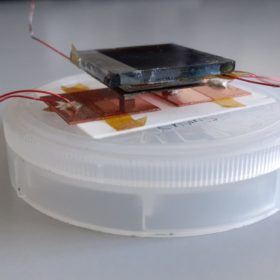
Recovering waste heat from solar cells via a thermoelectric generator
Scientists in Italy have created a hybrid thermoelectric photovoltaic (HTEPV) system based on a thermoelectric generator and a wide-gap perovskite solar cell. The device is able to recover waste heat from the PV unit and produce additional power. According to its creators, this configuration needs large gap cells as these are less sensitive to temperature in terms of efficiency
