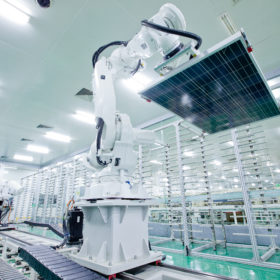
Jinko claims 24.79% efficiency for n-type monocrystalline cell
The Chinese manufacturer has claimed a world record for a large-size, contact-passivated solar cell. The result, certified by Germany’s Institute for Solar Energy Research in Hamelin, betters the company’s previous record by almost 0.6%.
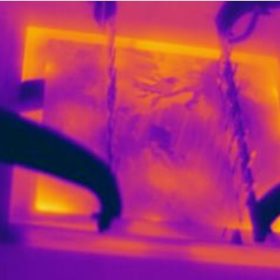
New protocols identify solar cell failures during production
Two new pass/fail protocols are said to be able to separate cells which present high hot-spot possibility, show high current leakage and demonstrate intermediate behavior. The sorting technique relies on a manual solar simulator, an infrared camera and a tool to measure isolation.
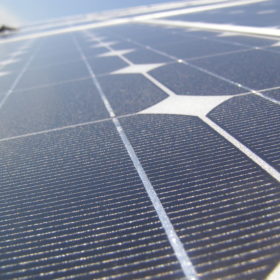
India’s ReNew Power to build 2 GW factory
The Haryana-based developer will invest up to $266.9 million to set up a new solar cell and module manufacturing facility.
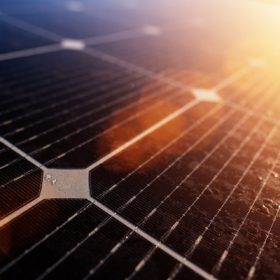
URE announces Taiwan factory disposal
The Taiwanese manufacturer said it has sold its Jhunan Kebei plant to a Taiwan-based maker of masks for semiconductor production. However, it will increase capacity at its manufacturing facility in Tainan by up to 200 MW in the third quarter.
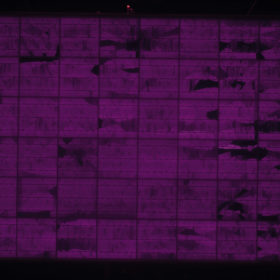
How the cracks are forming
Scientists in the United Kingdom have investigated the formation of cracks in PV cells, confirming that the high temperatures cells are exposed to during soldering for interconnection are a leading cause of cracking. Their findings will aid future research into module reliability and predictions of how cracks are likely to form.
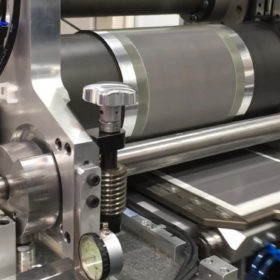
New equipment for solar cell metallization
The system can metallize the front and back sides of silicon solar cells with unprecedented precision and speed, Fraunhofer ISE said. The technology is also suitable for components such as printed circuit boards or chip cards.
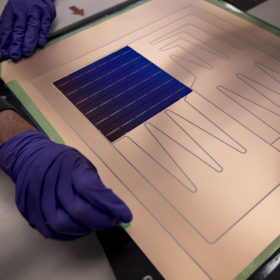
Heterojunction MWT solar module based on 23%-efficient cells
Scientists in the Netherlands have claimed that a heterojunction metal wrap-through solar module they are designing could offer a 4% performance improvement over conventional heterojunction panels.
European consortium bid to bring 25.4%-efficient heterojunction-IBC solar cell into mass production
The EU-funded Nextbase project aims to manufacture heterojunction, interdigitated back-contact solar modules for less than €0.275/W. Solar panels featuring the Nextbase cell tech are expected to have a conversion efficiency of 23.2%, according to the European Commission.
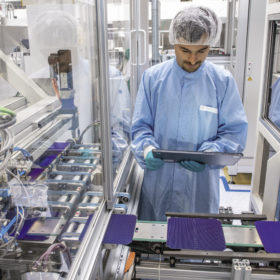
Meyer Burger moves to become a solar cell and module manufacturer
Through a CHF165 million capital increase, the Swiss company intends to finance the expansion of capacities for highly efficient solar cells and solar modules in Germany. Production is scheduled to start next year. The strategic partnership with REC Group has been discontinued.
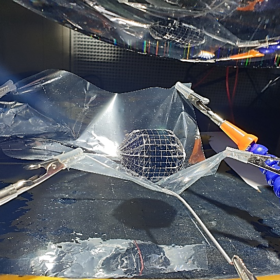
Spherical monocrystalline solar cells with 18.93% efficiency
The spherical 3D cells can reportedly generate around 101% more power than conventional flat solar cells. Measurements have also shown that the spherical cells provide a 10% lower maximum temperature compared to flat cells, while accumulating less dust.
