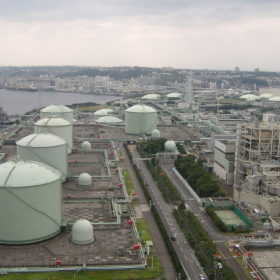
Cooling PV panels with regasification of liquefied natural gas
Researchers in Israel have suggested the use of regasification of liquefied natural gas to reduce the operating temperature of PV modules in solar parks located at gas terminals. According to them, the feasibility of such a cooling solution could be strengthened by the fact that both the PV systems and the LNG regasification systems are, separately, mature, economical technologies.
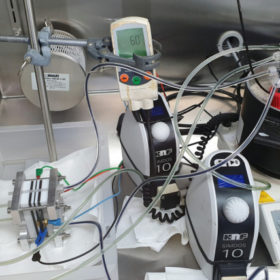
Ferrocene-based electrolytes for heat-resistant redox flow batteries
German scientists have developed a new electrolyte material that can cope with temperatures of up to 60 C. The material is based on ferrocene, an organometallic molecule known for good redox stability that is commonly used as an internal standard for electrochemical measurements.

Agrivoltaics for pear orchards
Belgian researchers are testing agrivoltaic power generation in a pear orchard. The first pilot project features specially designed 185 W solar panels with transparent backsheets, conventional silicon cells, and a 21% efficiency rate.

Solar, wind expanding rapidly in US market
Solar has accounted for nearly 3.4% of total national generation thus far this year, with wind contributing 8.5%. Coal, meanwhile, has plunged from about 30% last year to just 17.8%.
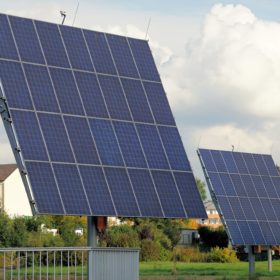
Badly-sited solar parks affect house prices
Researchers at the University of Rhode Island have suggested US homeowners are prepared to pay $279 per year to avoid living within a mile of a solar plant.

Mozambique tenders 120 MW of solar
The Ministry of Mineral Resources and Energy is tendering three solar power projects with capacity of 40 MW each. Mozambican utility Electricidade de Mocambique (EDM) is likely to be the future buyer of the renewable energy generated.
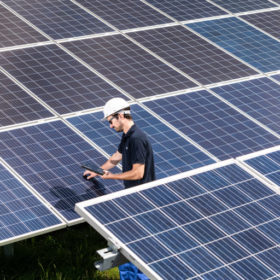
Germany breaches 52 GW mark with 409 MW of new solar in August
The first eight months of the year have brought 3.2 GW of new generation capacity, compared to 2.7 GW in the same period of last year.

Cost analysis shows off-grid-solar powered electrolysis potential of Australia and Chile
Scientists at the University of New South Wales have developed a model to determine the levelized cost of hydrogen (LCOH) by also considering historical weather data at specific locations. According to them, powering electrolyzers with off-grid solar offers the advantage of avoiding the expense of a grid connection and exposure to the risk of delays in both the physical connection and the approval process.
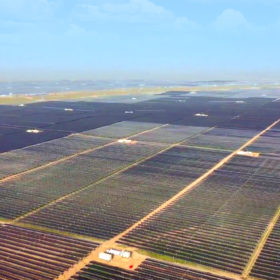
World’s largest solar plant goes online in China
Huanghe Hydropower Development has connected a 2.2 GW solar plant to the grid in the desert in China’s remote Qinghai province. The project is backed by 202.8 MW/MWh of storage.
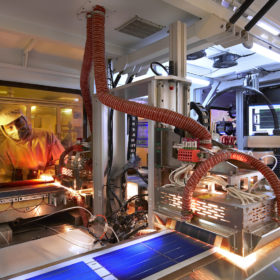
Trina kicks off production of 550 W panels
The PV module manufacturer has started mass production of its Vertex 550 W ultra-high-power modules at its factory in China’s Jiangsu province. It expects to start manufacturing 600 W panels in the first quarter of next year.
