
Negative energy price drives loss of Netherlands solar incentives
Negative energy prices for more than six hours mean the Dutch government will pay no renewables incentives under its SDE+ program for March 29. The plunging electricity price was caused by slumping demand for energy as restrictions were put in place to help prevent the spread of Covid-19.

Indian government backs multi-pronged approach to support solar sector
The Ministry of New and Renewable Energy is working on the creation of a Rs 10,000 crore (US$1.3 billion) alternative investment fund to provide payments to PV developers.
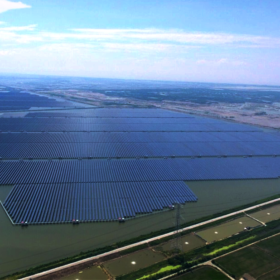
Another 120 MW of solar aquaculture in China
A 120 MW solar plant located in a fishery near Cixi, in the Chinese province of Zhejiang, was recently completed. The plant, which has secured a tariff of RMB0.95 ($0.12)/kWh, is the second phase of a 320 MW project owned by Chinese developer Hangzhou Fengling.
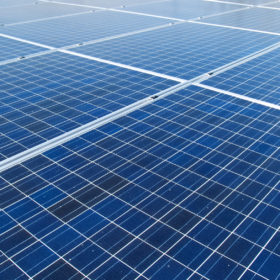
Fifteen-year PPA for 200 MW of PV in Mexico
Portuguese energy group EDP has secured a long-term power purchase agreement for its 200 MW Los Cuervos solar plant in the Mexican state of Aguascalientes. Local offtaker Ammper has agreed to buy the electricity.
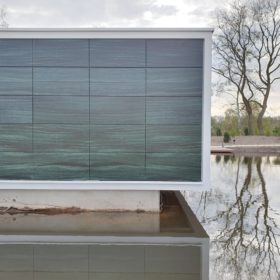
Wood-like solar facades
Taiwanese manufacturer Heliartec Solutions is offering BIPV panels for building facades that can be designed to mimic different kinds of textures in conventional building materials. The panels can also work as colored laminated safety glass and replace traditional cladding in the ventilated facades of buildings. They vary in length from 60 cm to 240 cm, with widths ranging from 30 cm to 120 cm. Depending on their size, the panels can offer power outputs of 90 W to 150 W per square meter.

Solar inverters vs. cyberattacks
A U.S. research group is now developing new inverters to protect solar installations from cyberattacks. The researchers also aim to create new cybersecurity standards. Professor Alan Mantooth, the group’s research coordinator, said that inverters can be shut down if they are hacked, or contribute to grid instability and result in the overcharging of batteries, while potentially creating problems that we still don’t know how to address.
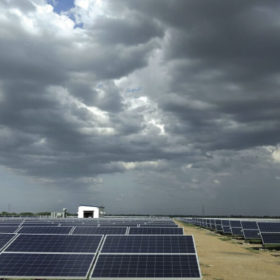
German solar installers expect massive market contraction this year
According to a recent survey by EuPD Research, political conditions are to blame for the expected slowdown, rather than the coronavirus pandemic. The potential failure to remove the 52 GW cap for solar incentives is expected to have a much stronger impact on potential investors.
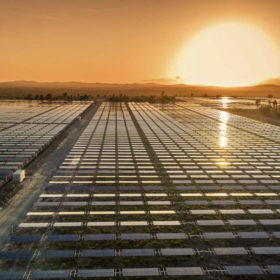
Falling power prices could benefit mega-sized solar and wind projects
The Covid-19 pandemic will create a “perfect storm” for Australia’s wholesale electricity market, as lower demand comes together with lower gas prices and the commissioning of large-scale solar and wind projects to depress power prices, according to a report by Melbourne-based consultancy RepuTex.
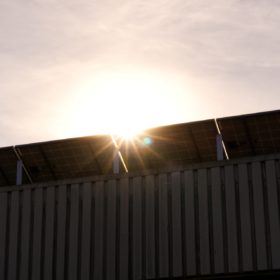
New technique to determine best cooling technique for solar modules
A new paper published by researchers at Malaysia’s Multimedia University provides a new method to assess the effectiveness of different cooling systems for photovoltaic modules. The proposed technique relies on measuring the output of the module with added cooling and comparing this to its power rating under standard test conditions.
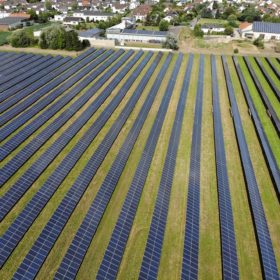
Would solar decarbonize French energy – or just replace nuclear?
A thinktank has studied whether increased solar energy would contribute significantly to reducing the carbon footprint of the French and European electricity systems in an attempt to respond to a common French refrain the nation needs no further decarbonization of energy because it has nuclear power.
