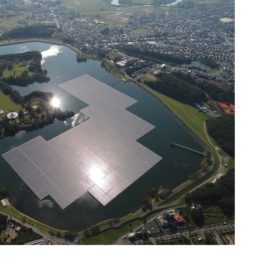
Belgium’s Flemish government makes first investment in floating PV
The Floating PV NV company has secured €2m for a floating solar plant on a site owned by Belgian raw material provider Sibelco. The funding is part of a €6m plan to support floating PV in Flanders.

Japanese utility KEPCO tests blockchain technology to determine value of surplus solar power
The power supplier is cooperating with the University of Tokyo, Mitsubishi UFJ Bank and Unisys, testing how solar power can be traded between solar prosumers and electricity consumers, while conducting transactions using a blockchain platform.
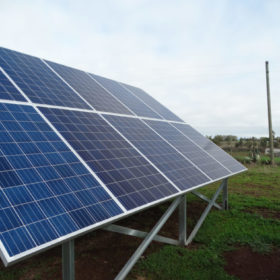
Use of PV can reduce diesel consumption in energy-intensive cultivation in southern Europe
Italian, Spanish and Portuguese scientists have published a study about energy consumption and the environmental footprint of the use of solar-hybrid irrigation systems in olive plantations in Portugal and Morocco.
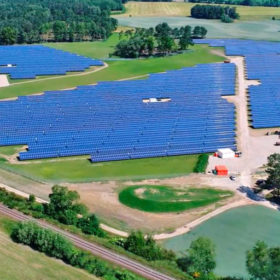
Germany’s auction for large-scale solar concludes with average price of €0.0469/kWh
The final average price was slightly higher than that of the previous auction of the same kind. Successful bids were between €0.0386/kWh and €0.0515/kWh per kWh. Unlike the parallel wind energy tender, the tendered capacity was significantly oversubscribed, once again.
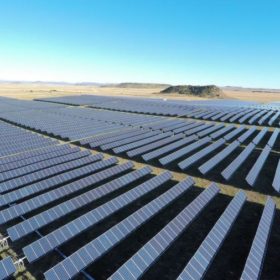
Scatec Solar reports higher revenue, lower profits
The Norwegian developer had 357 MW of PV projects in operation and 1,057 MW under construction at the end of the third quarter of this year.
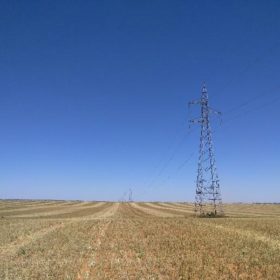
Total Eren seeks to expand Australian PV project to 450 MW
After addressing grid connection challenges, the French energy giant has launched construction on the 256.5 MW Kiamal Solar Farm. It is now looking to add a second stage of up to 194 MW, and is exploring commercial options for the approved 380 MWh of energy storage.

Lowest bid in Kazakhstan’s first solar auction reaches $0.05170/kWh
Four PV projects totaling 170 MW were selected in the first of a series of RE auctions to be held this year. Overall, the Kazakh government is planning to assign 290 MW of solar and a total of 1 GW of renewable energy capacity.
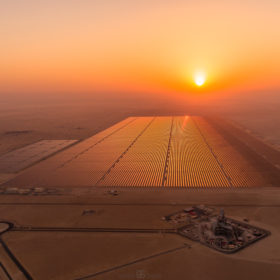
Dubai’s DEWA wants hydrogen at its 1 GW Mohammed bin Rashid Al Maktoum Solar Park
The Dubai Water and Electricity Authority (DEWA) has issued a tender for the construction of a hydrogen plant and associated facilities at the huge solar complex. In June, a pilot storage project based on NGK’s NAS Batteries was also launched at the facility.
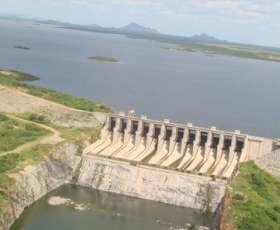
Brazilian state of Ceará begins tender for up to 45 MW of solar
The state’s Secretary of Resources intends now to conduct feasibility studies for a series of projects of up to 5 MW, which will provide local state-owned utilities Water Resources Management Company and the Water and Sewage Company with electricity.
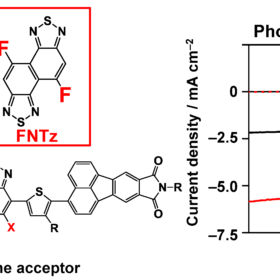
Fluorinated electron-acceptor improves yield of organic thin film solar cells
A Japanese research team claims to have tailored an electron-accepting unit, which has been successfully used in an organic semiconductor applied in a solar cell device that showed high PV performance.
