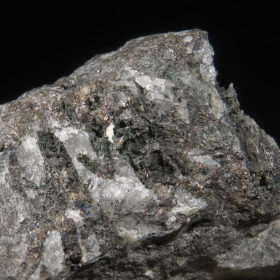
Kesterite solar cell achieves 12.01% efficiency via selenization approach
The Chinese Academy of Sciences (CAS) has used a new selenization approach to build a kesterite solar cell with better charge transport and power conversion efficiency. China’s National PV Industry Metrology and Testing Center (NPVM) has certified the results.

BP advances 100 MW green hydrogen project in Australia
BP will look at deploying a 100 MW electrolyser to produce renewable hydrogen for Australia and export markets. It aims to transform its former Kwinana oil refinery site in Western Australia into a green fuels hub.
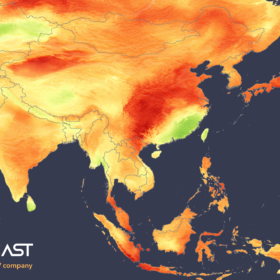
Typhoon Koinu smashes through ‘blocking’ high pressure across Asia
In a new weekly update for pv magazine, Solcast, a DNV company, presents its solar irradiance data for Asia in October.
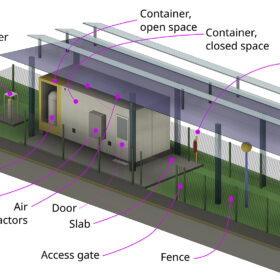
PV-driven microgrid for hydrogen, cooling
The University of French Polynesia has built a PV-driven hydrogen generation unit that combines a hydrogen chain with a thermochemical unit. The latter is used to recover waste heat from the electrolyzer and fuel cell to enable deferred cooling production for air conditioning.

Solar could be crowned ‘king’ of Latvia’s energy market
Latvia recorded 54 MW of installed solar capacity at the end of last year, according to International Renewable Energy Agency (IRENA) statistics. This is “miserable” compared to the country’s Baltic siblings, one energy expert tells pv magazine. But if Latvia lands the right utility-scale opportunities, solar could be one of its renewable energy stars.
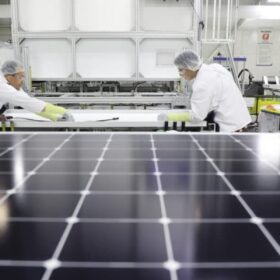
Maxeon sues Aiko Solar for alleged patent infringement
PV manufacturer Maxeon has filed a lawsuit in Germany claiming that its rival, Aiko Solar, has breached European patents for the architecture of back contact solar cells. Aiko Solar has denied the allegations.
IDeals lists Spanish solar M&As for October
iDeals and M&A Community says there were 16 merger and acquisitions (M&As) announced in Spain in October.
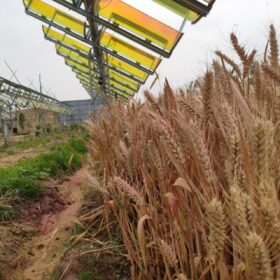
Agrivoltaic system achieves 9.9% efficiency, LCOE of $0.033/kWh
Researchers in China have built a prototype of a spectral-splitting concentrator agrivoltaic system (SCAPV) with a PV efficiency of 9.9, a hybrid light-use efficiency rating of 9.05%, and a levelized cost of energy (LCOE) of $0.033/kWh.
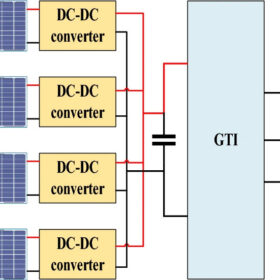
New MPPT approach for multi-string PV systems under partial shading
Egyptian researchers have developed a multi-string PV system with a converter control strategy, achieving 99.81% efficiency with a direct duty cycle for maximum power point tracking (MPPT).

Residential PV for urban loads as an antidote to solar curtailment
Researchers in the Netherlands have proposed the use of residential PV capacity to supply electricity to urban loads such as tram substations and dwellings, potentially reducing PV curtailment and demand for additional storage.
