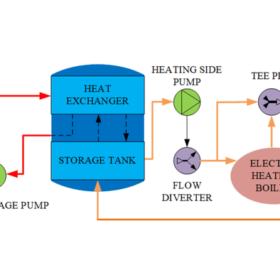
PVT-biomass system for space heating in small homes
A US-Chinese research group has developed a hybrid system proposal based on photovoltaic-thermal (PVT) modules, a heat pump, a backup electric boiler, and biomass generating units. They say it could be used as space heating in a single-floor home.

Brazil imported 5.2 GW of solar modules in Q1
High-power solar panels with outputs above 500 W accounted for more than 60% of all PV module imports to Brazil by volume in the January-March period.

Transgrid builds high-voltage interconnector to link Australian states
Transgrid, the transmission network owner in the Australian state of New South Wales, has started building its section of the AUD 2.3 billion ($1.64 billion) Project EnergyConnect. The high-voltage electricity transmission interconnector will link power grids across three states, unlocking gigawatts of planned renewables.

Japan launches rebate program for solar on farmland, water reservoirs, waste sites
The Japanese authorities will provide a maximum rebate of JPY 303,500 ($2,350)/kW for solar projects ranging in size from 10 kW to 50 kW. Projects above 50 kW will be assigned a rebate of JPY 205,900/kW.
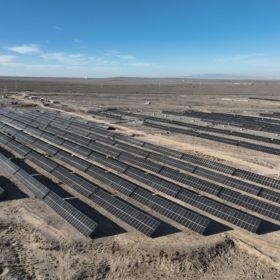
Chinese PV Industry Brief: China’s NEA predicts 108 GW of solar in 2022
The Chinese government says the nation is on track to install 108 GW of PV this year. Huaneng says it will build a new 10 GW module factory, while Akcome has revealed plans to increase its heterojunction panel capacity by 6 GW.
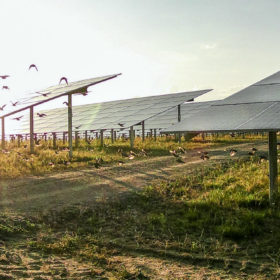
Germany deployed 553 MW of solar in April
Germany’s new solar additions for April included 517 MW under the country’s incentive scheme and 35 MW of unsubsidized installations.

Floating solar, tidal energy plant goes online in China
CHN Energy has linked a 100 MW floating PV plant to an existing 4.1 MW tidal energy system in China’s Zhejiang province. The tidal power station was commissioned in 1980 and is the fourth-largest system of its kind in the world.
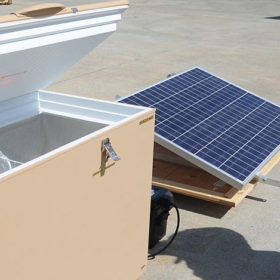
Photovoltaics for refrigeration
Scientists in Saudi Arabia looked at the potential of different solar technologies to meet energy demand for cooling systems. They found that PV is the best cost-effective option, especially for compression refrigeration cycles in hot climates.
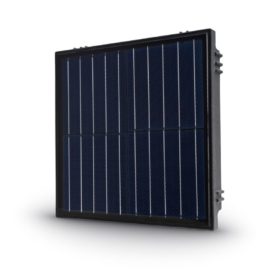
New solar module for pavement applications
Hungary’s Platio Solar has developed a new PV module line featuring monocrystalline and polycrystalline cells with clear or opal glass.
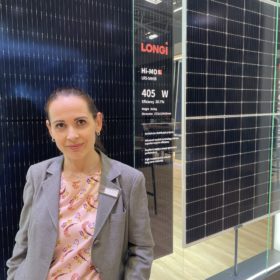
Higher prices not holding back European demand
With demand across European markets, and market segments, surging, supply of key components is tight. Longi has product and is ready to ship, according to Gulnara Abdullina, vice president Europe for Longi Solar, who reports that while some projects may be postponed, plans are not being shelved.
