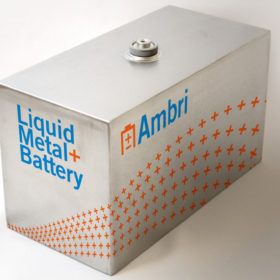
US utility to demonstrate liquid metal long-duration storage at solar test site
US utility Xcel Energy will test the use of Ambri’s energy storage technology at the Solar Technology Acceleration Center.

Chinese PV Industry Brief: Polysilicon price reaches new high at $45.4/kg, government takes action
Average polysilicon prices hit CNY 312 ($45.47)/kg this week, according to an industry association in China. The nation’s Ministry of Industry and Information Technology, the State Administration for Market Regulation, and the National Energy Administration have also asked regional authorities to take action to deal with the price increase.

Intersolar South America Day 3: Financing key for maturity of Brazilian PV market
Solar financing was a key topic on the third and last day of the Intersolar South America trade show in Sao Paulo, Brazil.
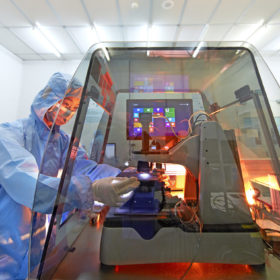
Trina Solar achieves 24.24% efficiency for 210 mm n-type TOPCon solar cell
Trina Solar said TÜV Nord in Germany has confirmed the efficiency rating of its latest solar cell.
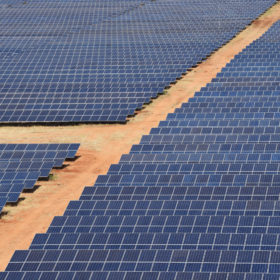
Avaada to invest $5 billion in green hydrogen, ammonia plant in India
Ravi Verma, senior executive vice president of Avaada, told pv magazine that the group will invest $5 billion in an integrated green hydrogen and ammonia plant with 6 GW of captive renewables capacity. The green ammonia facility will have a production capacity of 1 million tons per year.

Intersolar South America Day 2: Brazilian PV heading towards full market maturity
The second day of the Intersolar South America tradeshow happening in Sao Paulo, Brazil, showed companies’ eagerness for a bigger share of this huge solar market. New certifications, growth of the utility-scale business via power purchase agreements (PPAs), and opportunities for storage were recurring topics.
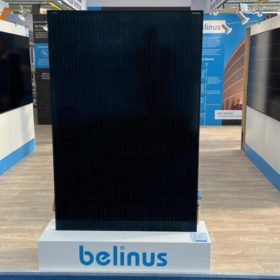
Belgian manufacturer unveils 400 W black glass-glass heterojunction solar module for residential applications
The new product features a power conversion efficiency of 22.0% and a temperature coefficient of -0.25% per C.
RWE buys Polish developer Alpha Solar
Alpha Solar currently has a solar project pipeline with a capacity of 3 GW in Poland.
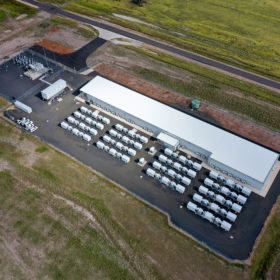
Vena Energy switches on 100 MW/150 MWh battery in Australia
The biggest battery yet connected to the grid in Queensland has commenced full commercial operations with developer Vena Energy announcing it has flicked the switch on the 100 MW/150 MWh Wandoan South battery energy storage system in the state’s south-west.

Italy launches call for €1.5 billion rebate scheme for PV in agricultural buildings
The Italian government hopes to deploy 375 MW of PV capacity via the rebate scheme. The funds will be provided through the post-Covid recovery plan.
