
Heat-storage building material to passively cool PV systems, batteries
German researchers have developed a new shape-stabilized phase change material with the ability to store up to five times more thermal energy than commercially available PCMs.

Smarter E products at a glance
pv magazine summarizes the products we covered at the recent Smarter E exhibition, in the first of a series of reports on all of the new releases from the annual trade fair in Munich, Germany.

BIPV facade for new exhibition space in Switzerland
Switzerland-based Novartis has deployed a 36 kW building-integrated PV facade on its new exhibition center in Basel. The system features 10,680 organic PV modules from France’s Asca.
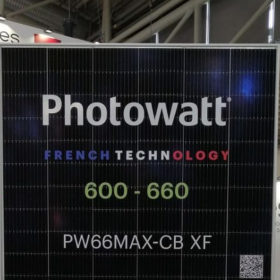
Photowatt unveils G12 solar modules
Photowatt’s new bifacial modules rely on 132 half cells, measuring 210 mm, with power outputs of 600 W to 660 W. The new products will be available from early 2023, with about 40 MW of orders already booked.
Global solar demand to reach 190 GW this year, says IEA
The International Energy Agency expects solar, wind power, and other renewable energy technologies to achieve triple-digit global growth this year, with new PV additions set to reach almost 200 GW.

Chinese PV Industry Brief: JA Solar major winner in solar panel tender with 3.1 GW in bids
Meanwhile, Trina Solar has established a new branch for upstream operations and Longi has a officially changed its company name.
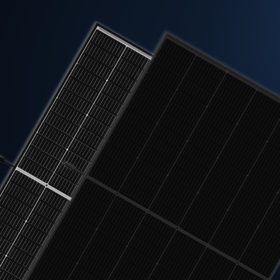
Smarter E Products: Trina Solar showcases G12 solar modules for rooftop applications
All the products rely on the company’s 210 rectangular silicon wafer (G12R) cell technology. The manufacturer claims these new products can increase the installed capacity of residential roofs by 5-7%. The largest panel is a 21.5%-efficient device with a power output of up to 580 W and the smallest features an efficiency of up to 21.3% and a nominal power of up to 425 W.
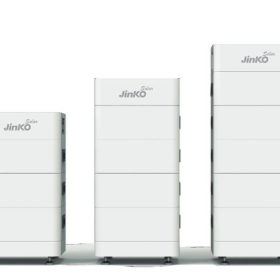
Smarter E Products: JinkoSolar unveils residential battery
The lithium iron phosphate battery is sold with a storage capacity ranging between 7.1 kWh and 21.31 kWh, a voltage of 192 V to 576 V, and a nominal capacity of 37 Ah.
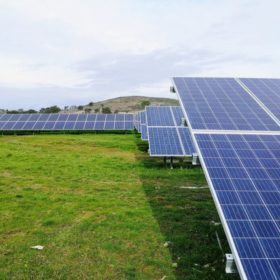
Aquila Capital confirms 1 GW solar PV pipeline for New Zealand
New Zealand’s transition to renewable energy has received a boost, as German investment manager Aquila Capital is teaming with renewable asset developer Far North Solar Farm to start construction on a 1 GW portfolio of large-scale PV projects.
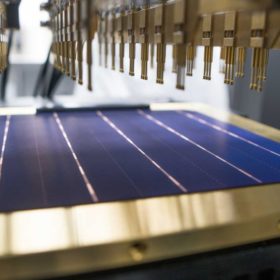
Trailblazer tipped to accelerate Australia’s clean energy transition
The University of New South Wales and the University of Newcastle have revealed plans to join forces to develop and commercialize “world-leading” technology in solar, renewable hydrogen, storage and green metals.
