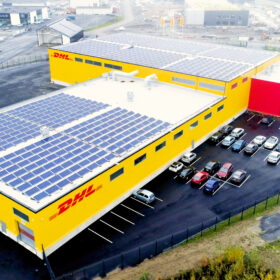
Is the EU doing enough to establish a solar manufacturing supply chain?
Compared to the Inflation Reduction Act (IRA) signed by Joe Biden’s administration in the US, the EU’s approach to establishing solar manufacturing appears slow and lacking in clarity. In this blog post, I will explore the EU’s renewable energy policy, specifically its emphasis on solar manufacturing, and evaluate whether Brussels is doing enough to establish a European solar supply chain.
Utilities, can you DG it?
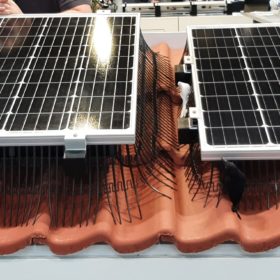
Small-scale PV systems drove the installation of more than 200 GW of solar capacity last year and could support more than 300 GW this year. That means a reset for utilities.
Weekend Read: Waiting is not an option
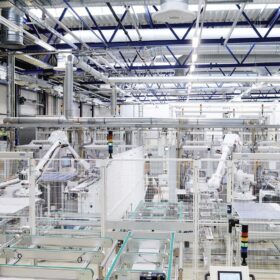
In May 2022, PV experts from around the world convened in Germany for the third Terawatt Workshop. Almost one year later, takeaways from discussions at the workshop – combined with a wide-ranging review of research on decarbonization pathways, energy demand projections, and the state of the art in PV technology – led to the conclusion that 75 TW of installed solar capacity by 2050 was a realistic global target. More than 50 leading PV industry figures recently outlined the opportunity and the challenges that solar will face in reaching this goal.
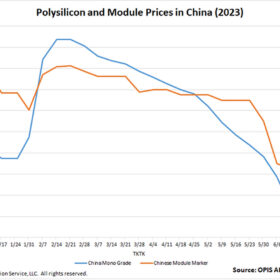
China solar module prices keep diving
In a new weekly update for pv magazine, OPIS, a Dow Jones company, provides a quick look at the main price trends in the global PV industry.
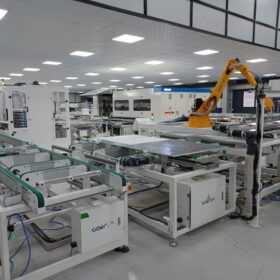
India’s Cliantech Solutions to supply 600 MW solar production line in UAE
Cliantech Solutions has agreed to supply a 600 MW, turnkey PV panel production line to Dubai-based Magnus Green Solar.

Weekend Read: Race to the top
A flurry of clean energy announcements in the European Union this year bodes well for the expansion of renewables but there will be a race against time to get key legislation adopted before next summer’s European elections.
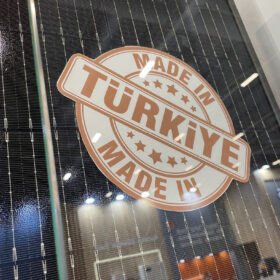
Weekend Read: A manufacturing bridge between Europe and Asia
A combination of protectionist measures, attractive profit margins, and domestic content incentives has revitalized Turkey’s solar manufacturing industry. Jonathan Gifford asks whether the resurgent sector can become a player on the world stage.
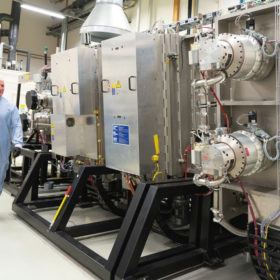
First Solar acquires Swedish perovskite specialist Evolar
First Solar has agreed to pay $38 million to buy Swedish manufacturing startup Evolar AB, as it seeks to expand development of high-efficiency tandem PV tech.
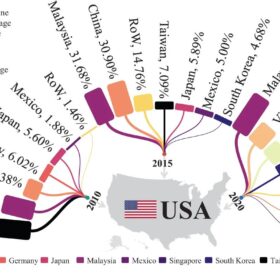
US-made solar panels could cut emissions by 30%, says study
Reshoring crystalline silicon PV panel manufacturing to the United States by 2035 could cut greenhouse gas emissions by 30% and energy consumption by 13% from 2020 levels, according to scientists from Cornell University.

Australia regretting belated transition as IRA sparks global race for renewables
When US President Joe Biden signed the $369 billion Inflation Reduction Act into law in August, it was lauded as the world’s most significant policy to combat climate change. However, some international critics and competitors claim the landmark bill thwarts their plans to foster green manufacturing at home. Australia is one country realizing that it may have already been left behind.
