
How much agrivoltaic shading is enough
Spanish researchers found that semi-transparent silicon PV greenhouses boosted tomato fruit weight by 25% while generating 726.8 kWh over two seasons, outperforming cadmium telluride PV and shaded controls. The PV-Si system balanced sunlight, temperature, and energy, showing strong agrivoltaic potential.
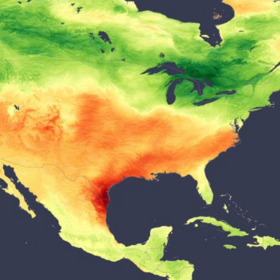
Heat dome and high pressure boost southern US solar as polar vortex clouds the north
In a new weekly update for pv magazine, Solcast, a DNV company, reports that last month North America saw a stark solar divide, with southern regions like northeastern Mexico, southeastern Texas, and much of California experiencing 20–25% above-average irradiance, while Canada, the Great Lakes, and the northeastern U.S. faced persistent cloudiness and below-normal solar conditions. This contrast was driven by high-pressure systems and a southwestern heat dome in the south versus a polar vortex bringing cold air and storms to the north.
Bauer Solar launches 480 W back-contact solar module
The German manufacturer said its new back-contact solar panel has a power conversion efficiency of up to 23.52%.
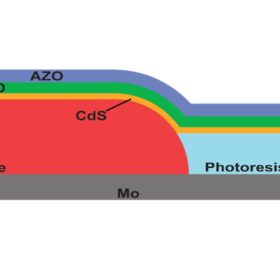
Copper, indium, selenium micro-islands pave the way for next-gen micro-concentrator solar cells
A German research team has developed CuInSe₂ micro-concentrator solar cells using laser-assisted metal-organic chemical vapor deposition to grow indium islands directly on molybdenum-coated glass, forming absorber arrays without masks or patterning. The not-yet-optimized micro-modules achieved up to 0.65% efficiency under one sun, with gains of up to 250% under concentrated illumination.
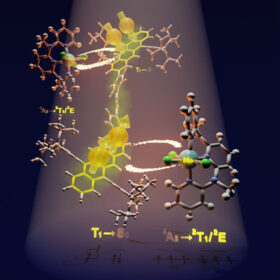
Spin-flip emitters could control energy pathways in singlet fission solar cells
Japanese researchers developed a molybdenum-based spin-flip emitter that efficiently harvests triplet excitons from singlet-fission tetracene dimers, producing strong near-infrared emission. This approach could boost solar cell efficiency and enable new quantum technologies by converting otherwise “dark” excitons into usable light.
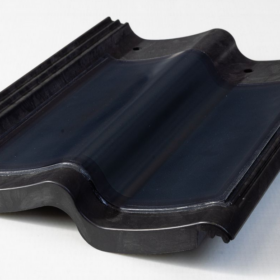
TNO unveils 12.4%-efficient perovksite solar tile
The Dutch research institute has presented what it describes as the world’s first perovskite-based roof tile, achieving up to 13.8% efficiency on standalone modules and 12.4% when installed on a curved surface. The flexible modules were produced using TNO’s experimental roll-to-roll platform,
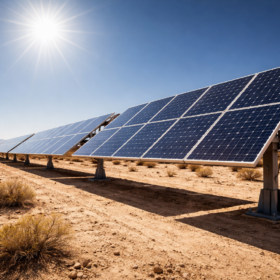
UNSW study finds tracker-based PV systems experience higher UV degradation than fixed-tilt arrays
New research from the University of New South Wales shows that PV module degradation varies widely with system design and location, driven by UV exposure, temperature, humidity, and atmospheric conditions. Tropical and desert regions face the highest stress, highlighting the need for climate-specific testing and system design.
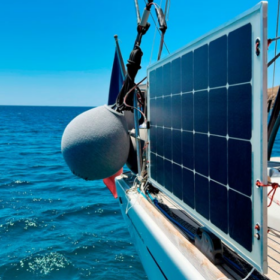
Solbian launches solar kit for boat davits
Available in 80 W and 108 W versions using high-efficiency SunPower Maxeon cells, the kit offers wind resistance up to 25 m/s and easy installation on unused boat surfaces, according to the manufacturer.

Ion beam technology offers pathway to low-defect silicon solar cells
Researchers in India demonstrated that ion beam implantation enables precise boron doping in silicon solar cells, reducing defects and improving charge transport. The proposed approach could support more efficient and reproducible p–n junctions, offering a pathway to higher-performance silicon photovoltaics.

Solar parks reshape soil biodiversity, plant traits
A study of 20 solar parks in southern France found that soil biodiversity and respiration drop significantly under panels, especially in mown areas, while plant traits like height and leaf area can increase under grazing. The researchers highlighted that climate, management type, and solar shading all shape soil and plant responses.
