
Hanwha Q Cells announces n-type module with passivating contacts
Production on the new module, called Q.Tron, is expected to begin this year. The product is described as an evolution of the company’s Q.antum cell technology.
Compressed air tech for solar module cleaning, cooling
British scientists have developed an experimental compressed air system for the simultaneous cleaning and cooling of PV modules. The system was built with a compressed-air unit which was made of a compressor, an air tank, and an airflow regulation valve, and a series of nozzles. The technique was tested on a PV system located in northwestern India.
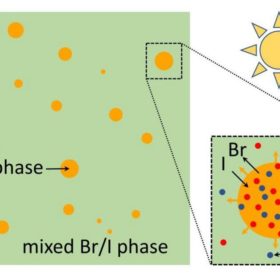
Thermodynamic model to build more-stable perovskite solar cells
Dutch scientists claim to have developed a theory that explains the mechanisms behind halide segregation, which is the main factor affecting thermal stability in perovskite solar cells. They affirmed that the theory may provide technical solutions to build more stable perovskite PV devices.
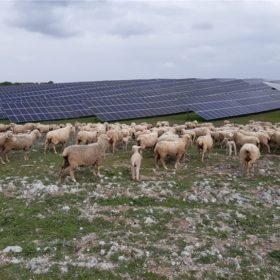
Iberdrola seeks innovative solutions for agrivoltaics
The Spanish utility said agrivoltaic projects and solutions will be evaluated based on costs, technological maturity, crop diversity, and level of digitization among other things.
Chinese PV Industry Brief: New 5 GW heterojunction solar module factory, increasing wafer and cell prices
China-based wind turbine manufacturer Mingyang Smart Energy wants to build a heterojunction module factory with a capacity of 5 GW. Both Longi and Tongwei have raised the prices of their wafers and cells, respectively.
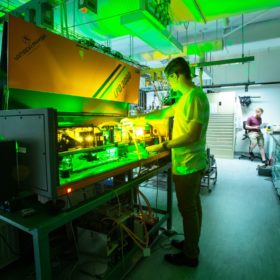
New discovery promises to bring singlet fission enhanced C-Si solar cells nearer to commercial production
New research from Australia has shown that singlet fission solar cells do not only have the potential to raise the theoretical efficiency of the PV technology to unexpected levels but also to provide a better temperature behavior and longer duration compared to conventional PV devices. The scientists believe that this technique may help conventional crystalline silicon solar cell technologies reach efficiencies close to 30%.
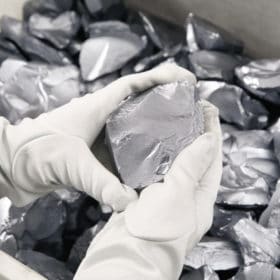
Daqo opens Xinjiang polysilicon factory to international observers
The polysilicon manufacturer has once again rejected allegations of forced labor by opening the doors of its factory in China’s Xinjiang Uyghur Autonomous Region to international investors and journalists. Video footage of the event was published by the company on its website.
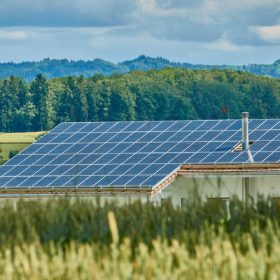
Dutch farmers left with no connection for their PV arrays
Grid congestion issues are increasing in the Netherlands and several Dutch farmers claim to have remained without access to the grid despite having completed their rooftop arrays.

Role of distributed solar at issue in California’s net metering update
Industry groups focus on solar-plus-storage, or preserving the distributed solar industry, while a state agency aims to compensate rooftop solar at avoided costs and add a grid service charge.
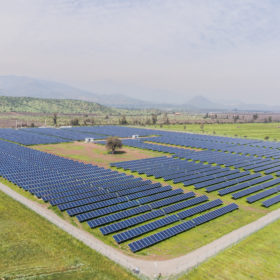
Another 2 GW of solar under review in Chile
The Chilean environmental authorities are currently scrutinizing the projects Solar La Pampina (160 MW), Gabriela (220 MW), Ghungnam Kcs (709 MW of PV and 300 MW of CSP), Pelequén (175 MWp), and Planta Solar Sol del Loa (640 MW).
