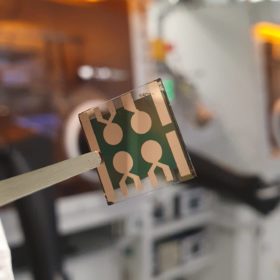
Inverted perovskite solar cell with 21.1% efficiency and high moisture resistance
Australian scientists have built a perovskite solar cell based on 2D and 3D salts. By adding a fluorinated lead salt in the processing solution – normally used to form 3D methylammonium lead iodide – they were able to achieve a 21.1% efficiency, an open-circuit voltage of 1.12 V, a short-circuit current of 22.4 mA/cm2, and a fill factor of 84%.

JinkoSolar announces 23.01% efficiency for n-type monocrystalline panel
The PV module relies on Jinko’s TOPCon mono cell technology, for which a record efficiency of 24.9% was announced last week. TÜV Rheinland has confirmed the result.

South Korea may tender 4 GW of solar PV this year
The Korea Energy Agency (KEA) will likely launch two 2 GW tenders in April and October. These will include the procurement of large-scale solar PV parks for the first time.
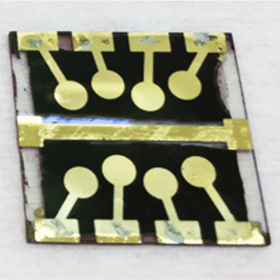
Water-splitting tech to reduce moisture in perovskite solar cells
Italian researchers have engineered a hole extraction layer with water-splitting additives to reduce the impact of moisture in perovskite PV devices. They claim that the method ensured a power conversion efficiency of more than 9% in perovskite cells stored for a month in a water-saturated atmosphere.
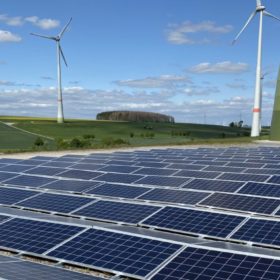
New mounting system to integrate small PV into wind farms
Switzerland’s Smartvolt has developed a special mounting system that facilitates the quick deployment of small ground-mounted PV systems at the base of wind turbines.

Chinese PV Industry Brief: Huge orders for Trina Solar and JYT Corporation
Trina Solar has secured a 4 GW solar module order from US company Nextera Energy and wafer manufacturer JYT Corporation closed deals to supply a total of 1,906,000,000 wafers.

SunPower to close module factory in Oregon in June
The US module maker plans to start shutting down production in Hillsboro in March. Around 170 employees are affected by the closure. At the same time, however, Sunpower is examining other options for continued operation.

Dutch business regulation agency rules network operators lacking capacity are allowed to deny grid-connection
The Netherlands Authority for Consumers & Markets has established that the first-come, first-served principle applied by grid operators is the correct approach to manage current grid congestion. The decision was taken to resolve a legal dispute between Liander and an agricultural entrepreneur that was denied grid access for a PV project.
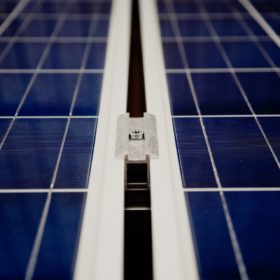
‘There is no clear best module configuration under partial shading’
A Slovenian research team has analyzed the behavior of a full-size cell PV module and several 1/6 cell panels under partial shading and has come to the obvious conclusion that the cell cut panels suffer fewer energy losses. They also found, however, that the orientation of the cells connected in series should be aligned as much as possible with the shade shape to lower the losses and to minimize reverse cell voltage.
The state of the art in perovskite tandems
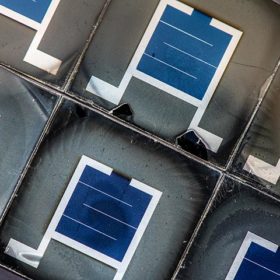
A new paper from scientists in China and Canada examines the recent progress in the development of perovskite-silicon tandem cells, finding a technology that’s poised for rapid commercialization, with a few research challenges still to overcome. These are primarily related to ensuring the perovskite layer can match the lifetime of the silicon cell underneath.
