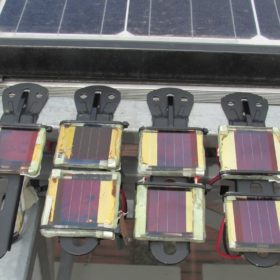
Measuring outdoor performance in perovskites
Scientists in Spain and Colombia took a closer look at the degradation mechanisms affecting perovskite solar cells, and developed a new, high throughput method to characterize their performance in an outdoor setting. The group evaluated the method through outdoor testing on perovskite modules manufactured in a lab. it expects its findings to offer easier device characterization and better understanding of the degradation mechanisms affecting perovskite solar cells, both important factors in the technology’s development.
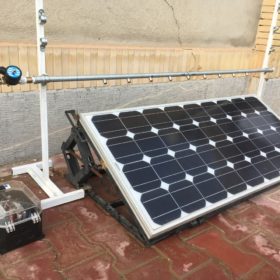
Pulsating spray cooling system for PV modules
Iranian scientists have assessed a new active approach for solar module cooling based on water spraying. Water sprayed from different angles can reduce the operating temperature of PV modules, with limited water consumption. However, the team noted that they have yet to assess the economic viability of the system.

North Macedonia announces 60 MW solar tender
The procurement exercise has been planned for the first quarter of the year.
Chinese PV Industry Brief: New planned IPO and more solar glass deals
Huawei has strengthened its technology partnership with Chint, while TBEA is planning an IPO for its polysilicon unit Xinte Energy. Furthermore, glass manufacturers keep acting to overcome current bottleneck.
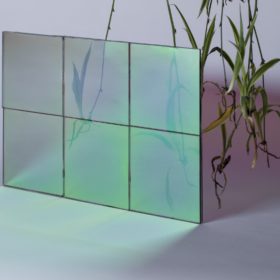
Germanium-based solar cell tech for agrivoltaics
German scientists have fabricated an enhanced amorphous germanium PV cell that confines light in an ultra-thin absorber. It has the potential to combine PV with photosynthesis in new solar applications on bio-reactors, greenhouses, and agricultural land.
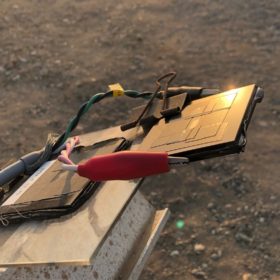
Bifacial perovskite-silicon tandem cell with 25.2% efficiency
International researchers have developed a silicon heterojunction PV cell with textured surfaces to accommodate the perovskite top cell. They optimized the rear transparent electrode to collect as much albedo as possible and achieved five different perovskite bandgaps by altering the iodide-to-bromide ratio in the perovskites, resulting in a higher open-circuit voltage.

Longi says appeal hearing for patent litigation with Hanwha Q-Cells is planned for April
In the first instance, the Düsseldorf Regional Court in Germany ruled in favor of Hanwha Q-Cells, but Longi Solar has appealed the judgment. There is also still a struggle for the validity of the patent between the photovoltaic companies at the European Patent Office. In addition to Longi Solar, REC is also reporting another partial success in the legal dispute with the South Korean photovoltaic manufacturer.
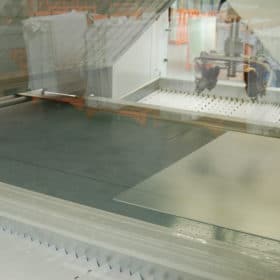
Anti-soiling nanocoating for large-scale PV
Dutch company Rads Global Business has developed an anti-soiling coating for solar PV modules that is claimed to reduce cleaning cost by around 60%. The anti-reflective and anti-corrosive coating is also said to mitigate potential-induced degradation (PID).

Spanish PV struggling with snowfalls caused by Storm Filomena
While Spain is struggling with the largest snowfall since 1971, pv magazine editor Alejandro Diego Rosell has asked two Spanish experts what the consequences of the massive snow loads produced by Storm Filomena will be on solar installations. According to them, some PV systems may stop working completely and component failures may not be excluded.
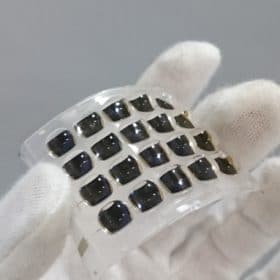
Stretchable CPV module with 15.4% efficiency
Japanese scientists have fabricated a prototype CPV panel that could be applied on spherical surfaces with a curvature radius of 100 mm, and under outdoor one-sun irradiation. The module is based on a silicone concentrator lens, a thermoplastic polyurethane sheet, and a rigid III–V triple-junction solar cell.
