
Techniques to build thermally co-evaporated mini perovskite solar panels
Scientists in Singapore have reviewed all thermal evaporation techniques for the production of perovskite solar cells and modules. Despite limitations, the new methods could lead to high production throughputs and more efficient products.

Tata Power to set up 255 MW wind-solar project for Indian utility
Tata Power Renewable Energy has agreed to build a 255 MW hybrid power project in India, featuring 170 MW of wind and 85 MW of solar.

New electrolyzer to split saltwater into hydrogen
Chinese scientists have developed a new way to split seawater into hydrogen without using a separate desalination process. They incorporated a self-breathable waterproof membrane and a self-dampening electrolyte (SDE) into the electrolyzer, so water migrates from the seawater across the membrane to the SDE, without extra energy consumption.
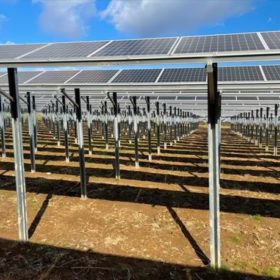
Mibet commissions 4 MW agrivoltaic project in Japan
Mibet, a Chinese mounting system supplier, has completed what it claims is the biggest agrivoltaic installation in Japan. The solar modules for the 4 MW project in Fukushima prefecture were installed on Mibet’s agrivoltaic mounting system.
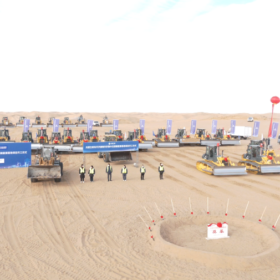
Construction begins on massive solar-plus-storage project in China
China’s Three Gorges New Energy has started building the first 1 GW phase of solar-plus-storage capacity for a planned 16 GW mega-project in Inner Mongolia’s Kubuqi Desert. Upon completion, the massive installation will include 8 GW of solar, 4 GW of wind, and 4 GW of upgraded coal capacity.
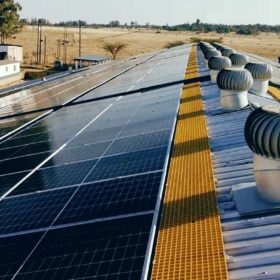
Zimbabwe announces incentives for 1 GW of IPP solar projects
The Zimbabwean government has agreed to guarantee viable power tariffs to 27 solar projects by independent power producers (IPPs). Developers are set to build 997.9 MW of capacity, with a total investment of around $1 billion.
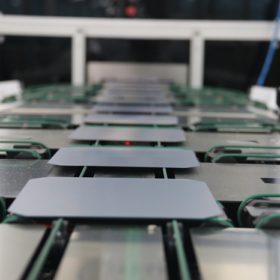
Chinese PV Industry Brief: Longi, TCL cut wafer prices by more than 20%
Longi and TCL Zhonghuan have announced wafer price cuts, Arctech Solar said it will supply 2.8 GW of single-axis trackers for solar projects in India, and Risen Energy has started mass production of its heterojunction (HJT) solar modules.
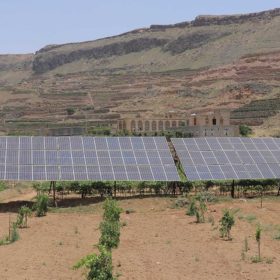
Masdar to build Yemen’s first large-scale solar plant
Masdar has signed a joint cooperation agreement with Yemen’s Ministry of Electricity and Energy to build a 120 MW solar plant in Aden. It will be the country’s first large-scale renewable energy project.
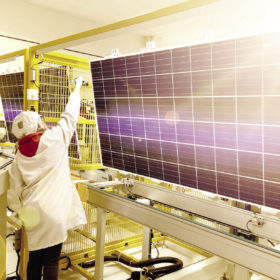
2022 review in trends: Modules (Part II)
N-type technology’s shift to the mainstream of PV production was a major development in solar cell and module manufacturing in 2022. Manufacturers added TOPCon and HJT capacity and racked up efficiency milestones in the process.
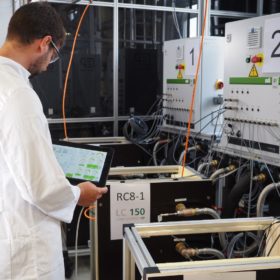
Fraunhofer ISE to develop propane heat pumps for residential homes
Germany’s Fraunhofer Institute for Solar Energy and a group of heat pump manufacturers have started a project to replace gas and oil heating systems in multi-family homes with propane heat pumps featuring low-charge propane (R290) as the refrigerant.
