
‘Technology geriatrics’ will not ensure survival of nuclear power, says analyst
The latest World Nuclear Industry Status Report shows that nominal net nuclear generating capacity fell by 0.4 GW between 2020 and 2021, even though six new reactors were switched on throughout the world last year. This brought the share of nuclear power in the global electricity mix to below 10% for the first time in four decades.
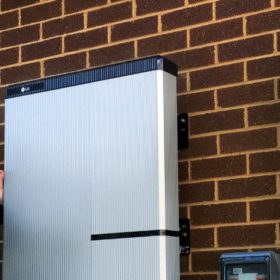
Pairing batteries with rooftop solar
A growing number of residential solar projects include energy storage batteries. In the first part of this series, we look at the backup power feature of batteries.
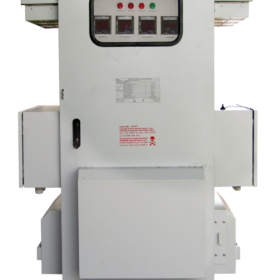
Statcon Energiaa launches plug-and-play microgrid inverter solution
India’s Statcon Energiaa has developed an outdoor inverter solution for microgrids that can integrate multiple energy sources, including renewables (biomass, wind, hydro and solar), battery storage, and diesel generators. It can deliver continuous, voltage-stabilized power to the loads and supports AC and DC coupling.
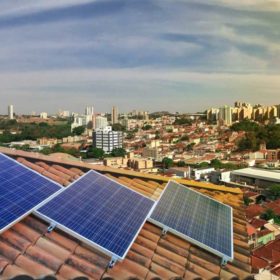
Portugal’s first solar energy community yields results
The first renewable energy community in Portugal was inaugurated in August 2021 in Miranda do Douro, a rural village in the north. One year on, pv magazine spoke with the company behind the project to assess its status. With a production capacity of 73.3 kWp, solar has saved the community €31,500 ($30,850) on electricity bills.
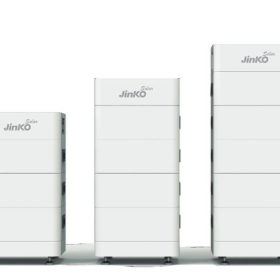
Storage could reshape solar market in MENA
Waleed AlHallaj, the head of business development for the Middle East and North Africa (MENA) at JinkoSolar, recently spoke to pv magazine about the prospects for the regional energy storage market. He said that storage systems have already penetrated markets with weak grids, such as Yemen and Lebanon.
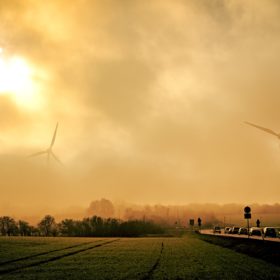
Ripple effects of EU revenue cap on renewable energy
The European Union’s much-needed emergency measures to tackle the ongoing energy crisis may have unintended consequences for the region’s renewable energy ambitions, warn analysts, but the impact on power purchase agreements will likely vary, depending on the contracts.
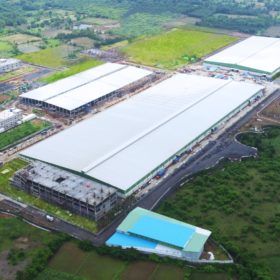
Waaree Energies raises $122.4 million to expand solar manufacturing
Indian solar manufacturer Waaree Energies has raised INR 1,000 crore ($122.4 million) from a number of private investors to support its module capacity expansion to 9 GW and its new cell line to 5.4 GW.

Italian government loosens permits for more large-scale renewables
The Italian government has decided to unlock 314 MW of new renewable energy projects, including a 60 MW agrivoltaic plant in the southern region of Apulia.
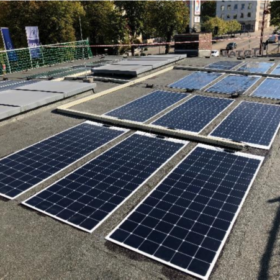
Maxeon shuts down French solar module factory
Maxeon has closed its last PV module factory in Europe, as it cannot remain competitive due to its small size and high raw material costs.

Fraunhofer ISE develops direct metallization tech for heterojunction solar cells
Germany’s Fraunhofer ISE is applying its FlexTrail-printing technology to the direct metallization of silicon heterojunction solar cells. It said the technique reduces the use of silver, while maintaining high efficiency levels.
