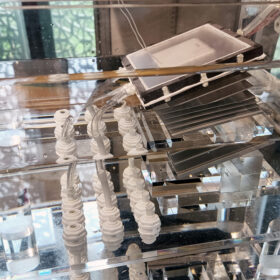
MIT scientists develop solar desalinator with high water output
Massachusetts Institute of Technology (MIT) researchers have developed a solar desalinator with high water output, via a multi-stage system of evaporators and condensers. It offers cost-effective solar desalination, making solar-produced drinking water cheaper than tap water for the first time.
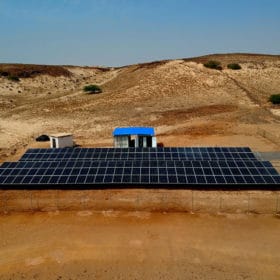
Bangladesh introduces fiscal breaks for solar-powered water desalination
Bangladesh has introduced tax exemptions to reduce water production costs and promote the use of solar power in 19 coastal districts. This initiative comes in response to grid electricity shortages caused by a decline in coal and fuel imports. The goal is to enhance reliance on solar-powered water desalination in these areas.

PV-powered portable seawater desalination system for drinking water
US researchers have developed a portable desalination unit that generates clean drinking water without filters or high-pressure pumps. The device is powered exclusively by solar energy and requires just 20 W of power per liter.
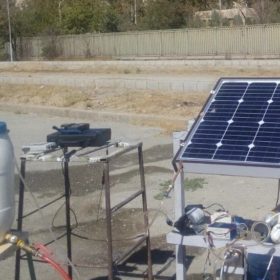
Stand-alone brackish water desalination system powered by photovoltaic-thermal unit
The BWRO unit, which has a treated water production capacity of around 11.80 L/h, was built with a pre-filtration module, a high-pressure DC pump, an RO module, and a post-treatment module. The PVT system was designed to meet the energy requirement of a high-pressure DC pump and a diaphragm-type circulation pump utilized to circulate soft water beneath the PV module for the active cooling of the panel itself.
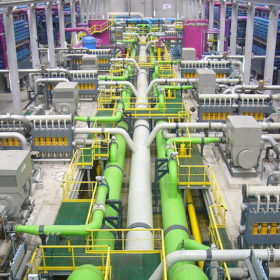
PV powered desalination is “the most competitive design”
Scientists in France conducted an analysis on the competitiveness of water desalination, taking a large scale project planned for Morocco as a case study. The research concludes that PV without storage is the cheapest option to power desalinators, and will likely remain so until at least 2030.
The life of brine
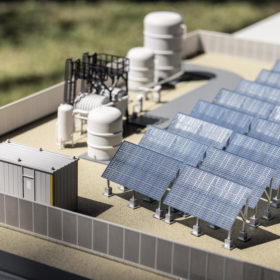
Solar remains an interesting option to power water desalination despite obstacles to its widespread adoption. A recent study has highlighted the processing or dumping of brine waste as an important factor to consider.

Egypt evaluating solar desalinators
The government has signed a memorandum of understanding with Saudi energy company ACWA Power to conduct a feasibility study for an unspecified volume of renewables-powered desalination projects.

Solar brings safe water to Bangladeshi coastal communities
F Cubed, an Australian company that specializes in solar-powered desalination systems, has landed a contract valued at almost $5 million to supply 1,140 units that will provide clean drinking water to around 30,000 people in Bangladesh.

PV to address water scarcity
The government of the Philippines will spend $500 million on solar-powered water supply and desalination in remote areas of Mindanao, the second-largest island in the archipelago. Elsewhere, a Finnish study has suggested drought-hit Iran could benefit from renewable-powered desalination.
India takes to solar-powered desalination
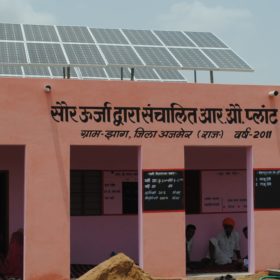
A 10,000-liters-per-day plant in Tamil Nadu offers hope for powering clean water without fossil fuels. However, researchers warn the technology is difficult to scale up because PV panels take up so much space.
