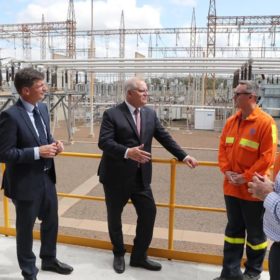
Australian government reduces support for solar, wind
The Australian government has announced new long-term funding and an expanded remit for the Australian Renewable Energy Agency beyond 2022. The funding package, which looks more like a cut than anything else, pushes investment away from solar and wind toward technologies like carbon capture and storage.
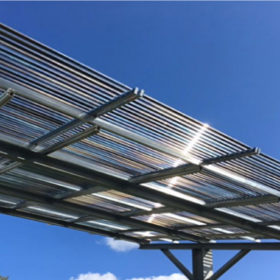
Thin-film agrivoltaic solar tubes
German tech company Tube Solar AG has secured €10.8 million to develop its cylindrical agrivoltaic modules. The lightweight devices could also be used on roofs until now considered unsuitable for PV.
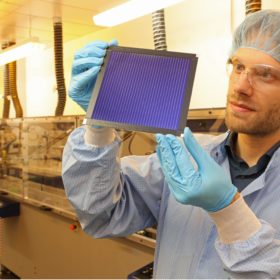
New world record for large-area organic PV module efficiency
Scientists in Germany have achieved 12.6% efficiency with a 26 sq cm organic panel and 11.7% for a 204 sq cm device. The feats were achieved with a new module layout and a slower, high-resolution, short-pulse laser structuring process.
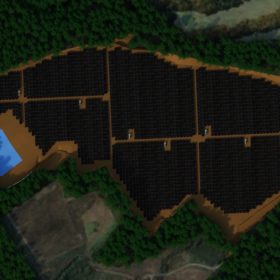
Toshiba develops more Japanese solar and hydrogen
The electronics giant is building two PV plants with a combined generation capacity of 58 MW owned by U.S. module manufacturer First Solar. Toshiba is also extending its hydrogen research project in Fukushima for another two years.

French government considers cutting pre-2011 FITs
Financial newspaper Les Echos claims the government is mulling a renegotiation of historic feed-in contracts after the Court of Auditors in 2018 ruled the incentives too generous.

South Africa to tender 6.4 GW of solar and wind, 513 MW of storage and 4.5 GW of conventional generation
The country’s regulator has approved a government plan to tender for 11.81 GW of power generation capacity on top of the 2 GW tender opened last month.
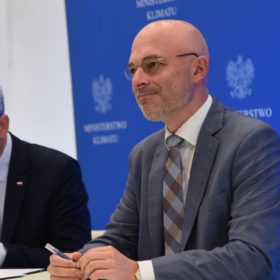
Polish solar manufacturers unite to compete with imports
Businesses, supported by the government, will join forces to strengthen their industry and contribute to the European Green Deal through made-in-EU products.
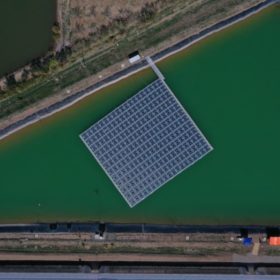
Chile connects first floating PV plant to grid under net billing scheme
Developer Solarity has completed the first floating PV array to be connected to the national distribution network under Chile’s net billing scheme. The plant will supply 100% of project owner Hortifrut’s energy needs, while allowing it to sell excess power to the grid.

SNEC 2020 CEO Series, Shanghai – Interview with CEO of Ginlong Solis
As one of the most rapidly growing inverter manufacturers, Ginlong Solis went public and became listed on the Shenzhen Stock Exchange (SZSE) early last year. With the support from the capital market, Ginlong Solis continued its rapid growth. According to Wood Mackenzie, the company ranked among the top ten inverter manufacturers in terms of global product shipments in 2019. How has Ginlong Solis developed its market strategy? What new products and solutions is Ginlong Solis showcasing at SNEC 2020 in Shanghai? And how is the company dealing with the impact from the COVID-19 pandemic? These issues are addressed in the following interview with Wang Yiming, the founder and CEO of Ginlong Solis.
Bulgaria wants another 2.6 GW of renewables by 2030 – and coal
The government’s energy strategy targets new clean energy capacity this decade but all existing coal power plants will also remain active, gas pipelines could be upgraded and new nuclear facilities deployed.
