
Global solar EPC market dominated by US, German, Indian contractors
Although the Wiki-Solar website ranking only provides a snapshot of PV project engineering, procurement and construction contracts outside of China, it is nevertheless a useful indicator of the changing global solar market landscape. Of the top 11 companies, four are based in India, three in Germany, and two in the United States. But last year’s largest contractor, U.S.-based First Solar, might lose its leading position this year, as it has largely discontinued its EPC activities.
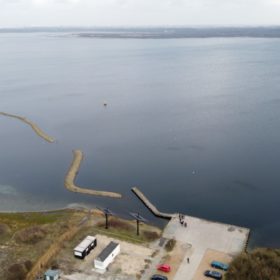
Waves, wind & floating PV
Dutch research center TNO is setting up a test facility for floating PV plants in Oostvoornse, where it will analyze the impact of wind and waves on floating structures and module yield. TNO Senior Project Manager Jan Kroon told pv magazine that it will assess module damage and the impact of waves on light absorption. It has already found that the ratio between wave-height and wave-length is a key factor in mismatch losses, while noting that optimizers and micro-inverters on panels could mitigate losses.

Sunrun withdraws 2020 residential solar guidance, lays off 100 employees
Sunrun laid off about 100 employees last week, according to Business Insider, which reported that furloughed staff will continue to receive benefits for three months.

Utility-scale floating PV for Indian coal mines
Solar Energy Corp. of India has tendered two floating PV projects with a combined capacity of 15 MW. The two plants will be deployed at a storage reservoir (10 MW) and an open-cast project void (5 MW) in the Indian state of Telangana.
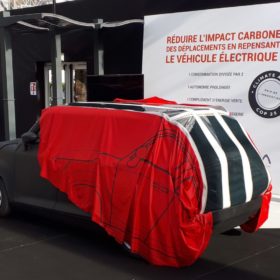
Solar car tarp to recharge EV batteries
French solar thin-film specialist Armor has designed a retractable automotive solar cover. It has deployed an initial prototype on a Gazelle electric car, but it said that the cover can be used on any kind of electric vehicle.
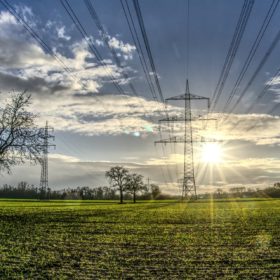
World now has 583.5 GW of operational PV
Global grid-connected solar capacity reached 580.1 GW at the end of 2019, along with 3.4 GW of offgrid PV, according to the International Renewable Energy Agency. Total installed renewables capacity hit a remarkable 2,563.8 GW, with hydropower remaining the dominant source at 1,310.9 GW, followed by wind at 622.7 GW.
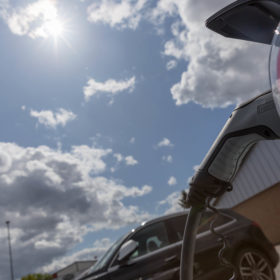
How much money can you make with PV-assisted EV charging stations?
A French-Turkish research team has created an economic model to optimize scheduling for solar-powered EV charging units. The proposed model suggests that such projects might be more profitable today than at the end of the decade, depending on a wide range of variables.

General Electric works on grid-forming inverter controls
The U.S. conglomerate plans to deploy and test new controls with its commercial PV LV5 inverter platform. It aims to develop “grid-forming” controls to allow wind and solar inverters to form voltage and frequency levels like traditional generators. The company wants to improve coordination and synchronization among multiple grid-forming resources, and is working on smart PV reserve controls to improve the transient stability of systems with high renewables penetration.

New Zealand may reach 6 GW of solar by 2050
National utility Transpower said that solar could take a 9.3% share of the country’s generation mix by the middle of the century. However, real growth is only forecast to occur from 2035, with distributed generation expected to account for more than 80% of total installed PV.
Indian government asks utilities to maintain payments to power producers
The clarification came after states across the country reacted to the power ministry’s recent call for a moratorium on conventional power payments by stopping payments and curtailing renewable power.
