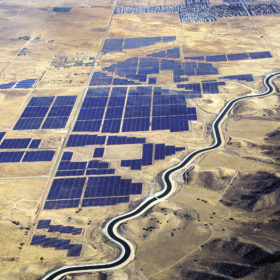
JinkoSolar says US authorities see no violation of Hanwha Q-Cells patent
The patentability of Korean company Hanwha’s technology is being examined by a U.S. commission, according to Jinko. The Chinese manufacturer said it expects a final decision by December. Hanwha responded by announcing its decision to appeal.
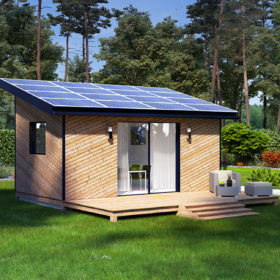
A wooden solar house for €1,700 per square meter
French start-up Solaire Box has raised €1.5 million to back its business supplying wooden houses complete with PV rooftops. The buildings cost €1,700-2,000/m² and feature PV modules made by French firm Systovi. The company plans add to add features such as energy storage systems and carbon-free heating.
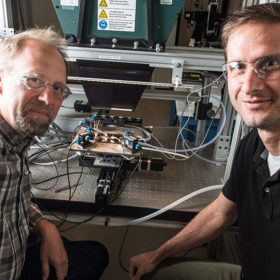
Six-junction III–V solar cell with 47.1% efficiency
A U.S. research group has developed a new solar cell, based on six active photoactive layers, to capture light from a specific part of the solar spectrum. The scientists claim that they could potentially reach a 50% efficiency rate with the new cell.
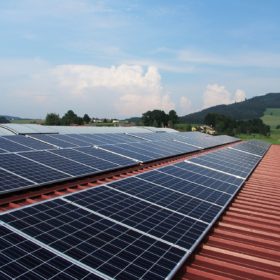
Portugal fast-tracks 30 MW of small solar to help hard-pressed businesses
The Ministry of Environment and Climate Action will permit 220 self-consumption projects with generation capacities of no more than 1 MW to be connected immediately. The usual long-winded permitting process has been side-stepped as the government seeks to enable financially-stricken enterprises to benefit from lower energy bills during the public health crisis.

‘Covid-19 will provide a significant enhancement to the renewable industry’
Even as global PV forecasts fall, tax equity dries up and unemployment rises, investor Jim Spano believes the right type of government stimulus could not only help the solar industry recover – but drive it to new heights.

Bringing green hydrogen to market
German companies Uniper and Siemens will cooperate on joint projects to advance the use of green hydrogen and sector coupling. Conventional, gas-fired hydrogen production plants will be gradually transformed as part of the initiative.
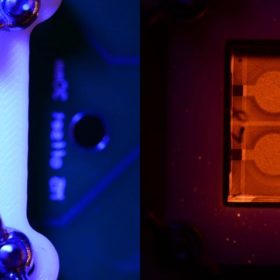
Shine! You’re on photoluminescence camera!
Researchers in Australia and China used intensity-modulated photoluminescence to map the series resistance of perovskite solar cells with a technique which could further understanding of the causes of instability issues in such devices.
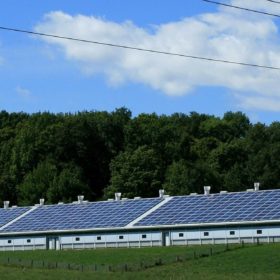
A big grid solution to harness small solar arrays
Scientists at the U.S. National Renewable Energy Laboratory are developing a communication system to coordinate and control the volumes of solar power injected into grids by small scale solar arrays.
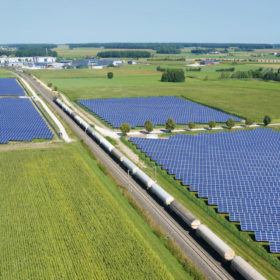
Enormous solar PV success with 20 years of EEG
Twenty years of EEG: For many, this is a reason to celebrate; for opponents, a reason to curse. Regardless of your assessment, the success of the EEG in establishing solar photovoltaics as a key energy source is tremendous and will change the world for the better. Solar power is already cheaper than all other energy forms and is available on a mass scale.
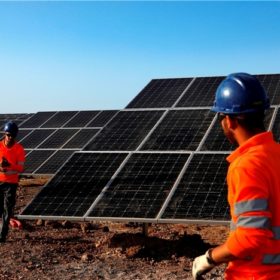
Europe’s largest solar park now online
Iberdrola’s 500 MW Núñez de Balboa solar park has started commercial operations, following the completion of construction in December.
