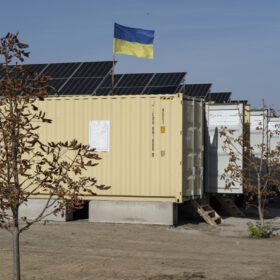
German company installs PV-powered desalination plant in Ukraine
Germany’s Boreal Light says it has installed a desalination plant in Mykolaiv, Ukraine. It claims that the system – which uses 560 W solar modules to produce 125 cubic meters of clean water per hour – is Europe’s largest PV-powered desalination project.
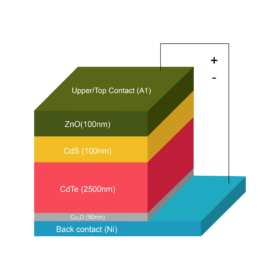
Novel cadmium telluride solar cell design with potential efficiency of 31.82%
Scientists in Bangladesh designed a cadmium telluride solar cell with upper/top and back contact materials made of aluminum (Al) and nickel (Ni). The device reportedly showed a quantum efficiency of around 100 % at visible wavelengths.
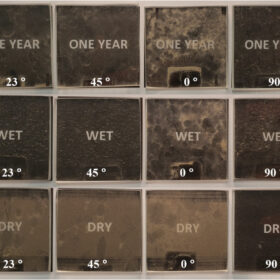
The impact of soiling on PV module transmittance
A European group has looked into the soiling impact on PV modules in Oman. They have collected 60 samples, based on season, month and tilt angles.

Construction starts on Sweden’s largest solar farm
Neoen and Alight have started building the 100 MW Hultsfred solar farm in Sweden, which will purportedly be the country’s largest solar installation upon completion.
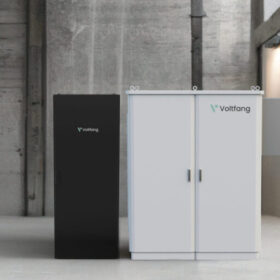
Voltfang launches ‘New Life’ commercial storage system with 45 KWh capacity
The battery storage system has 30 percent more power and capacity when compared to the German company’s previous model. The solution is particularly suitable for use in charging infrastructure, food-retail and commercial areas with high power peaks, the company claims.

Solargis notes potential inaccuracies in tropical solar irradiance data
Solargis, a Slovakia-based solar data provider, claims that the difference between modeled solar irradiance and real measurements is more significant in tropical regions than in subtropical zones. It argues that enhancing ground-based measurement stations and forecasts can enhance data accuracy and accelerate PV project delivery.
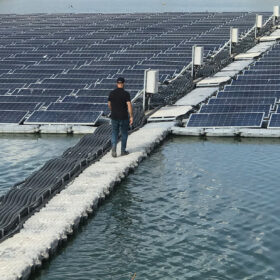
Caribbean could become offshore floating solar PV giant, researcher says
Land is scarce but water is abundant for the Caribbean’s 700 islands. Solar economy professor Christian Breyer tells pv magazine that the region’s archipelagic makeup is not a drawback but a benefit for renewable energy generation, with the ocean potentially serving as the area’s floating solar PV backbone.
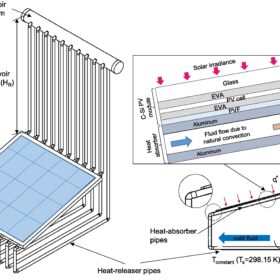
Passive cooling technique for floating PV systems
An international research team has built a cooling tech consisting of heat absorber pipes that are thermally connected to the PV module, heat releaser pipes that exchange heat with the water body, a series of connecting pipes, and a coolant reservoir. The system claims to create a continuous fluid flow that dissipates heat from the PV cells to the surroundings.

Swiss 3S introduces new half-cell BIPV modules
Swiss 3S, the Switzerland-based manufacturer, is offering the new half-cell BIPV module in four sizes, ranging from 24 half-cells to 48 half-cells. The rated output is up to 225 W.
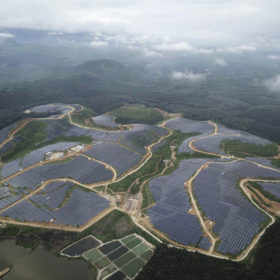
Machine learning for predictive maintenance in large-scale PV plants
Scientists have developed a machine-learning model – utilizing K-Means and long short-term memory techniques – that aims to overcome ‘fault detection and classification’ in the operation and maintenance of large-scale solar PV farms.
