
Italy installed 937MW of solar, 431MWh of storage in 2021
The country’s cumulative PV capacity reached 22.56GW at the end of December.
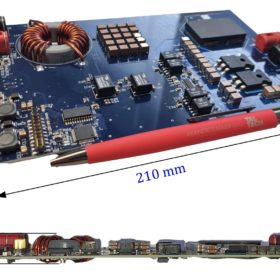
Novel power electronic converter for BIPV
Conceived by researchers in Estonia, the device is claimed to be compatible with both crystalline silicon and thin-film BIPV panels and to manage, easily, different voltage levels. It can be applied either in solar facades or BIPV rooftop arrays.
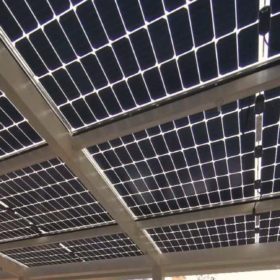
Longi releases Hi-MO 5 snow-load test results
Longi Solar has released the data of an inhomogeneous snow-load test. Its results show that its 72-cell solar modules held 1,800 pascals more force than a competing large format product using 210 mm cells.

Submersing modular raft for floating photovoltaics
Developed by a Dutch consortium, the Hide and Shine Floating Solar (HAS FPV) technology is claimed to be extremely resistant to storms and harsh weather conditions. The modules can be submerged totally or partially and, in case of a severe storm, they can be submerged up to two meters below the surface.
Solar parks could help to increase rainfall in arid regions
New modeling suggests that the reduction in albedo caused by large-scale solar plants could double rainfall in the Red Sea coastal plain of Saudi Arabia.
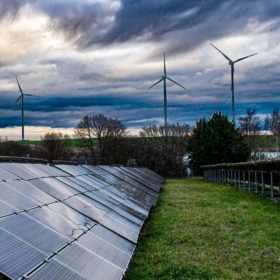
Subsidies, interest rates, carbon prices could disrupt renewables expansion
German and Swiss researchers have published a new study that questions the idea of a continual decrease in renewable energy costs, given the reality of rising interest rates and higher carbon prices. They outlined a scenario in which interest rates could rise by up to 5% and public incentives for renewables would be gradually phased out. This could result in a loss of 535GW of new renewables capacity, compared to a scenario in which interest rates remain at current levels.
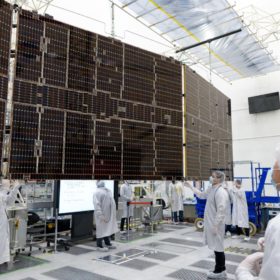
Psyche asteroid mission will be PV-powered, says NASA
NASA has said that it will explore a large, metal-rich asteroid with a remotely operated craft powered by two cross-shaped solar arrays.
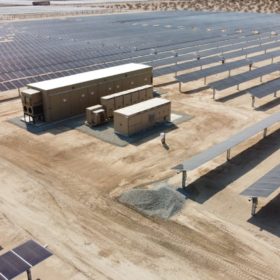
PV to account for about half of planned US utility-scale capacity additions
The US Energy Information Administration says that over the next two years, 60% of new capacity additions in the United States will be solar or battery energy storage.

India’s solar cell imports rise as domestic module production expands
The nation imported solar cells worth more than $633 million from April to the end of last year, a figure higher than the value imported during the whole of the 2020-21 fiscal year.
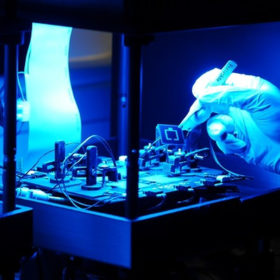
Hanwha Q Cells, Helmholtz-Zentrum Berlin claim 28.7% efficiency for 2T perovskite-silicon tandem solar cell
The Korean manufacturer and the German research center were able to improve the performance of their jointly developed tandem solar cell by almost one percentage point.
