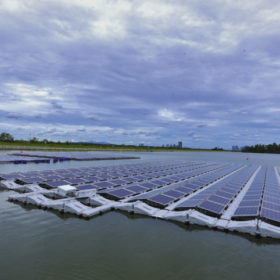
New alliance to expand floating PV in Southeast Asia
Pestech, a Malaysia-based electrical power technology company, has entered into a partnership with Chinese inverter maker Sungrow to jointly develop new floating solar solutions.
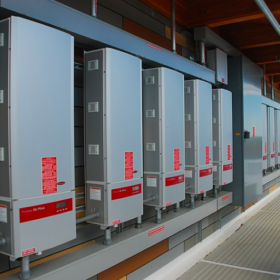
Wood Mackenzie expects more consolidation in inverter business
The research firm says the value of the global inverter market will continue to decline until 2024, even though shipments will likely increase. China’s recent policy changes have increased pressure on prices, which will contribute to greater consolidation in the sector.
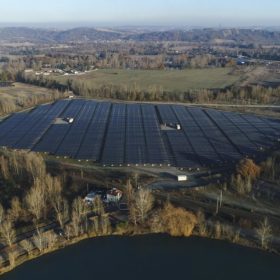
Why are prices rising in France’s utility-scale PV tenders?
Earlier this week, the French government published a list of winning projects for the sixth round of its tender for large-scale solar. There were a few changes from the preceding round, with French companies such as Urbasolar, Engie and Total consolidating their positions. However, even though a higher number of projects were submitted, prices increased slightly in the end. In a short conversation with pv magazine, Xavier Daval — a representative of SER, the French renewable energy association — explained the reasons for this.
Indian government invites solar research proposals
The MNRE has invited proposals for high-efficiency perovskite solar cells, solar panel recycling, hybrid inverters and new applications that combine solar and storage, among others.

German-French scientists develop ultra-thin GaAs solar cell with 19.9% efficiency
The researchers have developed a new manufacturing process by using an ultra-thin absorbing layer made of 205-nanometer-thick gallium arsenide (GaAs) and a nanostructured back mirror.
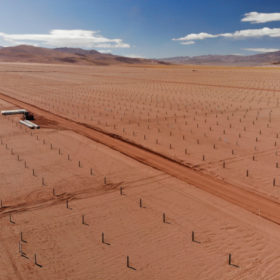
Argentina allocates 96.7 MW of PV in ‘mini’ auction
Of the 38 new renewable energy projects that have been awarded, 13 are PV plants, representing 96.75 MW of capacity. The average price for solar was $57.58/MWh, and the minimum was $54.22/MWh.

Bord na Móna seeks EPC contractor for 90 MW PV project in Ireland
The wind power specialist has started prequalifying EPCs for the ground-mounted solar plant, which will be built near Timahoe North, County Kildare.

Armenia to tender five more large-scale solar projects
The projects will be tendered under single-round competitive bidding processes, supervised by the European Bank for Reconstruction and Development.
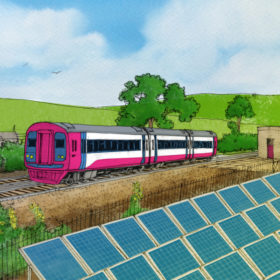
Don’t have a node for your solar plant? Connect it to the railway!
Railway operators can now feasibly connect solar plants to traction substations, claims a consortium that is now working on a similar demonstration project in the U.K. Almost all of the 30 kW installation’s output will be used to move trains, but in the future storage could come into the picture for larger “railway-connected” solar power projects, says 10:10, the U.K.-based climate change charity that developed the pilot.
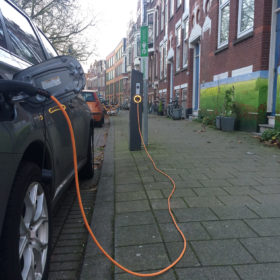
Economics of road transport starting to favor renewables
According to a new report by BNP Paribas Asset Management, renewables offer more advantages than simply mitigating climate change. Electricity is easier to transport than oil, and wind and solar electricity prices are much more stable than volatile oil prices. An analyst from the French bank argues that major producers will need to reduce oil prices below $20 to compete with clean energy in the transport sector.
