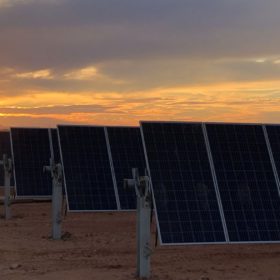
More big PV Down Under, as South Australia’s wind and solar pipeline swells to 10 GW
With the approval for a 176 MW solar farm and 66 MW battery storage facility near Murray Bridge, South Australia’s utility-scale wind and solar pipeline has reached some 10 GW.
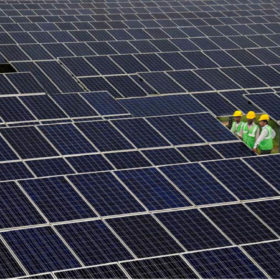
Avaada Energy to set up 2 GW of solar plants in India
Currently, the independent power producer has a portfolio of over 500 MW under India’s open access solar policy, with leading IT and manufacturing giants among its client base.

New-look auctions fire up Brazil
Next up in pv magazine‘s unsung solar markets series is Brazil, where a new series of auctions for solar has provided much needed clarity to the sector, at least up until 2021.

Myanmar issues tender for rooftop PV
The nation is targeting an unspecified capacity of solar PV systems to be installed on households and public facilities across several of its regions. The successful projects will be jointly financed by the World Bank and the government of Myanmar.

Ecuador to kick-off 500 MW renewables auction
Through the procurement exercise, the Ecuadorian government will select wind, solar and mini hydropower projects. Selected developers will be granted a 25-year PPA, while the sole off-taker of the generated energy will be state-owned utility Corporacion Electrica de Ecuador, S.A. (CELEC).

Poland launches €235 million solar rebate program
The Mój Prąd scheme will be open to residential rooftop PV projects ranging in size from 2 kW to 10 kW. Furthermore, the Polish Parliament approved a new act that will allow for the wind and solar auctions planned for this and next year to move forward.
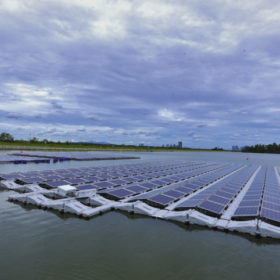
Eni plans Italy’s first utility scale floating PV plant of 14 MW
Italy’s first floating PV installation is scheduled to be located at an artificial water basin in Brindisi, in the southern region of Apulia.
Small solar parks appear in Sweden
pv magazine‘s delve into unsung solar markets continues with a look at Sweden. While its installation numbers are small, solar in the Scandinavian nation has developed steadily, and megawatt scale installations are beginning to appear.

Lowest bid in Tunisia’s 500 MW solar tender comes in at $0.0244
All five offers received by the Tunisian government were under the three-cent threshold. The lowest bid was for a 200 MW solar plant Norwegian developer Scatec intends to build in the Tataouine province.
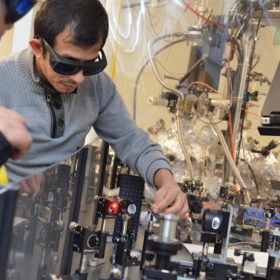
One atom layer to ‘free the electrons’
Scientists from the University of Kansas say adding a layer of two-dimensional semiconductor molybdenum disulfide can greatly improve the performance of organic solar cells. The research could also inform efforts to engineer the interface between layers in hybrid organic cells.
