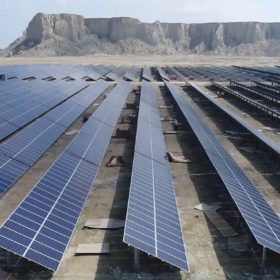
Italy’s Maresca Group plans 200 MW of solar in Iran
Following the completion of a 10 MW solar PV plant on the Iranian island of Qeshm, the Italian company is now planning to build another two projects with a capacity of 100 MW each in the country.
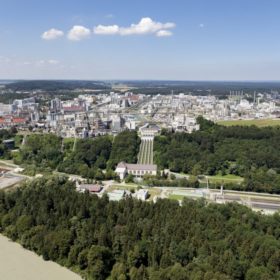
Wacker reports €1.07 billion EBIDTA for 2017
The turnover of the Munich-based chemical company increased by 6%. The polysilicon business of Wacker Chemie also continued to increase last year; however, the production halt in the U.S. prevented even stronger growth.
China Smarter Energy acquires 300 MW PV project in China’s Ningxia Hui Autonomous Region
The Chinese solar power plant operator has agreed to acquire the projects for around US$13 million in its largest-ever transaction. At the end of November, the company’s PV plant portfolio in China reached 180 MW.

Energy storage or grid extension – wrong question, right answers, finds panel
Panel discussion at Energy Storage Europe tackled the issue of whether the best way for keeping the lights on as economies around the world grow is to extend the grid network or add energy storage, and found that the best solution lies somewhere in between.
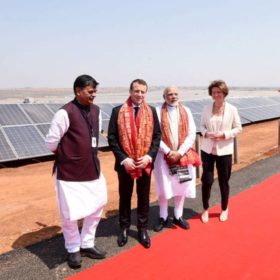
Engie commisions 140 MW Bhadla plant, signs 250 MW solar PPA in India
French President, Emmanuel Macron, and Indian Prime Minister, Narendra Modi both inaugurated Engie’s 75 MW PV plant on March 12, 2018, in Mirzapur, Uttar Pradesh. On the occasion, France-based Engie also announced the status of another two PV, and two wind projects.
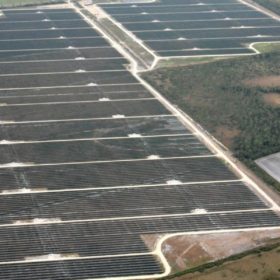
NextEra builds largest solar+storage plant in USA
The power company, which recently placed bids to build the largest battery energy storage project in the world, has connected a 74.5 MW PV project with a 10 MW/40 MWh storage facility, in the United States.

Bahrain issues tender for solar IPP project at landfill site
Developers are invited to submit a concept for proposals for an IPP solar project planned to be located in the Askar landfill site, in the Southern Governate of the Kingdom of Bahrain.

UK: Spring Statement silent on solar
U.K. Chancellor, Phillip Hammond’s Spring Statement was delivered to the House of Commons earlier this afternoon. While the announcement did include provisions for greener products and services, and support for cleaner vehicles, solar and renewable energy were not mentioned specifically.
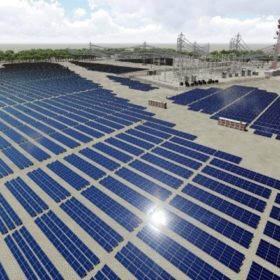
Construction begins on Colombia’s second solar park
The 8.8 MW Celsia Solar Bolívar plant will be located in the municipality of Santa Rosa de Lima, in the northern Department of Bolivar. It is part of the 250 MW solar project pipeline of Colombian renewable energy developer, Celsia.

Energy Storage Europe opening session presses home focus on sector coupling
The keynote session of the Energy Storage Europe conference in Düsseldorf, Germany, delivered a series of presentations on the role flexible sector coupling can play in expediting the adoption of storage technologies and renewable energy, in Germany and worldwide.
