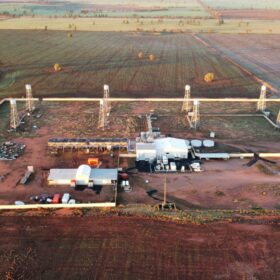
Australian startup begins work on agrivoltaic project with thermal storage
Graphite Energy, a thermal storage company, is building a facility in Australia to demonstrate how renewable energy and agriculture can co-exist through agrivoltaic and greenhouse systems.
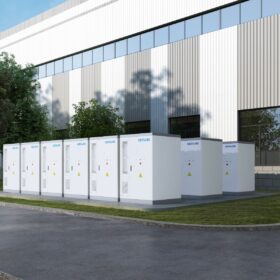
Weiheng Ecactus releases 233 kWh all-in-one battery system
Weiheng Ecactus has unveiled its new Tianwu battery system, with 233 kWh of capacity and 100 kW of output, giving users the flexibility to connect up to 10 units in parallel.

War in Ukraine triggered unique phase in renewables history
Human Geographer Thilo Wiertz speaks to pv magazine on the particular features that characterized the trajectory of renewable energies after the outbreak of the war in Ukraine. He emphasized how the geopolitical tensions arising from this conflict have reshaped the political debate about the energy transition, with the energy security perspective gaining in importance.

Israel to build energy communities in villages destroyed by Hamas
Israel’s Ministry of Energy and Infrastructure says it is currently developing a multi-year program for communities attacked by Hamas on Oct. 7. It aims to deploy 5 GW of energy in the destroyed areas, once residents return.
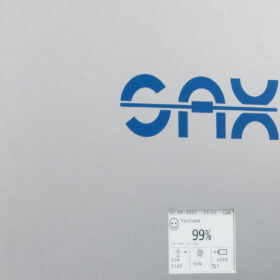
Sax Power unveils plug-in 5.8 kWh lithium iron phosphate battery
Sax Power has developed a 5.8 kWh lithium iron phosphate battery, priced at €4,957 ($5,403) for end customers, with a smart meter for precise electricity delivery.

EU Parliament’s vote on Net-Zero Industry Act prompts mixed reactions
European solar lobby groups have mostly welcomed the European Parliament’s recently supported EU Net-Zero Industry Act, which is aimed at strengthening the region’s renewables manufacturing sector. However, two groups are divided over a clause in the Act that limits tendered project’s from using technology partially made outside Europe.

PV-driven Carnot batteries may help convert coal power plants into renewable energy facilities
Danish researchers investigated how solar-powered Carnot batteries could be integrated into decommissioned coal power plants to produce clean energy. They found that a 300 MW retrofitted plant coal plant with 1.37 GWh of thermal storage capacity has the potential for annual net power production of up to 1,150 GWh for 12 h storage at a levelized cost of energy of €88.09 ($95.97)/MWh.

Former coal-plant big batteries win Australian storage tender
More than 1 GW of firmed storage capacity is set to be delivered by six winning projects from a recent tender in the Australian state of New South Wales. Akaysha Energy’s 415 MW/1,660 MWh battery in Wellington and AGL’s 500 MW/1,000 MWh Liddell battery are the round’s two biggest projects.
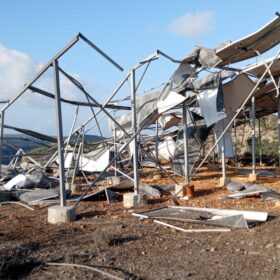
Self-financed solar array destroyed in Lebanese farming village
One of the project architects behind a solar power system in a southern Lebanese village tells pv magazine that the 200-panel array – which pumped water from an underground well for roughly 400 families – was allegedly destroyed earlier this month by Israeli forces. The community needs help rebuilding it, he says.

Dyness releases 1.6 kWh battery for balcony PV systems
Chinese manufacturer Dyness has unveiled a 1.6 kWh battery designed for balcony PV systems, allowing users to stack up to four units for a total storage capacity of 6.4 kWh, with a reported lifespan of more than 8,000 cycles.
