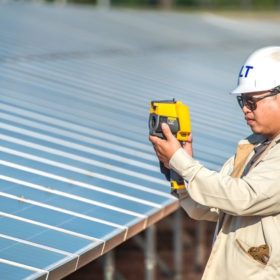
ADB, EDC launch 2 GW solar program in Cambodia
The Asian Development Bank (ADB) and Électricité du Cambodge (EDC) have signed an agreement to develop 2 GW of solar in the Southeast Asian country. EDC will conduct a nationwide study to identify potential solar and storage projects for implementation up to 2030.

Uninterrupted PV generation without storage
An Israeli scientist has proposed a way to achieve uninterrupted PV power on the moon without using energy storage. The proposal involves the installation of PV panels around a 360-degree latitudinal ring close to one of the moon’s poles. There would be no inter-array shading, and static vertical PV arrays and arrays mounted on single-axis vertical trackers could be viable mounting structures.
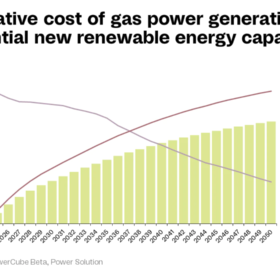
New solar capacity 10 times cheaper than gas, says Rystad
Operating gas-fired power plants would be 10 times more expensive in the long-term than building new solar capacity in Europe, according to research from intelligence company Rystad. Their study uses the levelized cost of energy (LCOE) for gas and coal-fired power generation at different price levels and compares it to the LCOE of solar PV and wind.
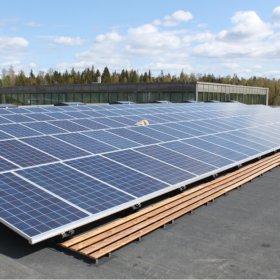
Finland to extend net metering to all PV systems in 2023
At present, only a few distributors offer net-metering services in Finland, meaning that only a small share of PV systems are net-metered. In 2023, all PV systems will be offered net metering through the country’s new centralized information exchange system for the retail electricity market.
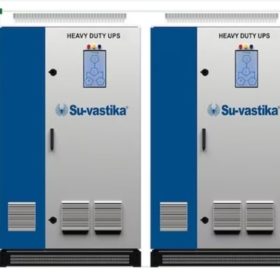
Indian startup launches solar-linkable UPS system for residential, commercial applications
Su-vastika introduced a three-phase uninterruptible power supply (UPS) system with power ratings of 10 kVA to 500 kVA. The backup time provided by the system can be extended by using solar power in conjunction with the battery bank.
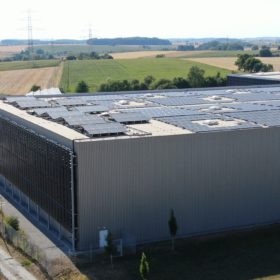
Polypropylene absorber to simplify brine heat pumps’ adoption
German company Mefa Befestigungs- und Montagetechnik has developed absorbers made of polypropylene that are intended to simplify the use of brine heat pumps. The novel technology should make it possible to combine multiple heat sources, including water, earth, air and also ice storage all within a single system.

Novel green lithium concept yields battery-grade product in Germany
Australian startup Vulcan Energy announced it produced high grade lithium hydroxide which ‘easily exceeds’ battery grade specification.
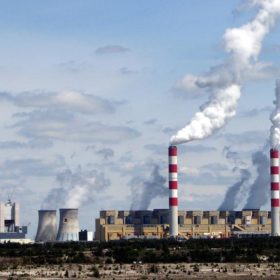
BNEF outlines scenarios to replace Europe’s largest coal plant with 10.7 GW of solar, wind
BloombergNEF (BNEF) has outlined a potential transition plan for a coal-fired power plant in Belchatow, Poland. It said that 5 GW of solar and 5.7 GW of wind could replace 80% of Belchatow’s lignite generation capacity by 2036, in an optimal scenario.
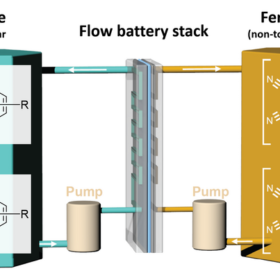
Quinone flow battery for grid-scale renewables storage now close to commercial viability
US startup Quino Energy has raised more than $7.8 million to scale up its quinone redox flow battery technology. Harvard University and University of Cambridge researchers came up with the initial research for the battery design.
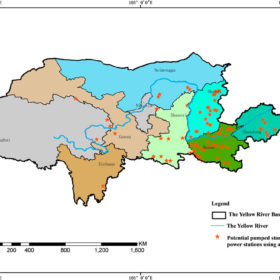
Pumped hydro storage for abandoned mines in China’s Yellow River basin
Researchers from China have discovered that 91 abandoned mines in China could host pumped hydropower storage facilities, with a total installed capacity of 15,830 MW.
