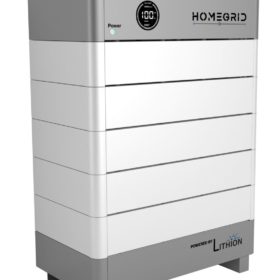
Stackable home battery with 9.6 kWh to 38.4 kWh of capacity
Lithion’s Stack’d Series LFP batteries are modular and can be scaled in 4.8 kWh increments, from 9.6 kWh to 38.4 kWh.
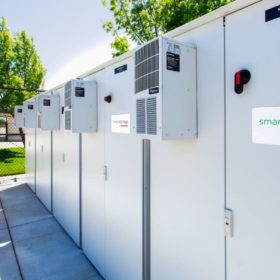
US lab reveals top findings for hybrid solar, storage plants
US government researchers have collected 10 observations from recent research papers that look at solar- or wind-plus-storage power plants in the United States.
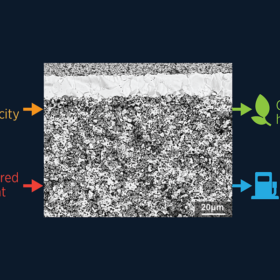
The Hydrogen Stream: Acid-treated cells produce about 200% more hydrogen
US scientists have improved the performance of intermediate-temperature electrolyzers based on protonic ceramic electrochemical cells. Germany and India have signed a hydrogen cooperation deal, while ArcelorMittal has tested the use of green hydrogen in the production of direct reduced iron at a steel plant in Canada.
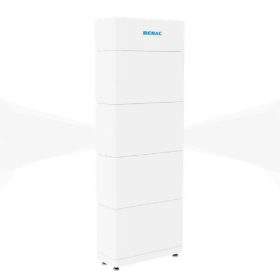
Renac Power unveils high-voltage residential battery
Renac Power’s new plug-and-play battery has a storage capacity of 3.74 kWh, but it can be enhanced in series with up to five batteries to 18.7 kWh. It has a nominal voltage of 96 V and a voltage range of 81 V to 108 V.
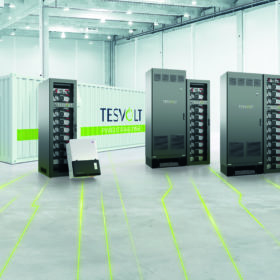
Tesvolt unveils new battery line for commercial, industrial applications
Tesvolt’s new E Series includes the TS-I HV 80 battery and the TS-I HV 100 battery, with storage capacities of 80 kWh and 90 kWh, respectively. Both of the devices have efficiencies of up to 98%.
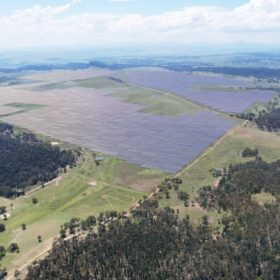
Maoneng reveals plans for 950 MW solar-battery project in Australia
Maoneng has unveiled ambitious plans to build a giant solar farm and battery energy storage facility in Australia.
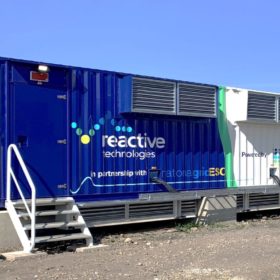
Ultracapacitor sonar seeking grid with 100% solar, wind
Reactive Technologies uses an ultracapacitor to send signals to the grid that help managers determine the level of system inertia, supporting power grid stability – and they’re coming to the United States.
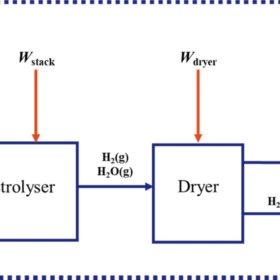
The Hydrogen Stream: High-pressure PEMEL electrolyzers for lower hydrogen costs
Elsewhere, Lotte Chemical and Air Liquid Korea will establish a joint venture to build a hydrogen supply chain in South Korea and the US Department’s Loan Programs Office (LPO) offered a conditional commitment for a US$504.4M loan guarantee to the Advanced Clean Energy Storage Project in Utah, which combines alkaline electrolysis with salt cavern storage for grid scale energy conversion and storage using hydrogen as the energy carrier.
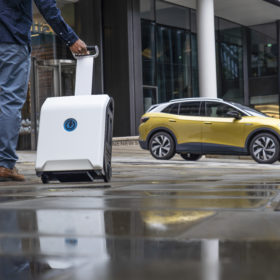
The mobility rEVolution: Portable EV charging stations for personal and shared use
In other news, BYD’s quarterly profit is up by 241% buoyed by demand for battery-powered cars, Ford takes a US$3.1 billion loss on its Rivian stake and cuts 580 jobs as part of corporate restructuring, and ABB agrees to provide its full portfolio of EV charging technology to Shell.
New PV water heater from Germany
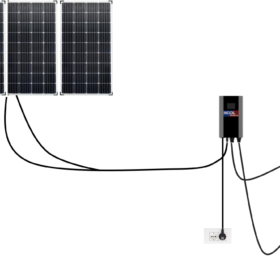
German startup Nexol has developed a photovoltaic water heating system that relies on a smart controller, with either DC and AC power. It decides autonomously if grid electricity or PV is used, with the latter always preferred.
