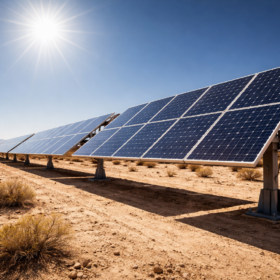
UNSW study finds tracker-based PV systems experience higher UV degradation than fixed-tilt arrays
New research from the University of New South Wales shows that PV module degradation varies widely with system design and location, driven by UV exposure, temperature, humidity, and atmospheric conditions. Tropical and desert regions face the highest stress, highlighting the need for climate-specific testing and system design.
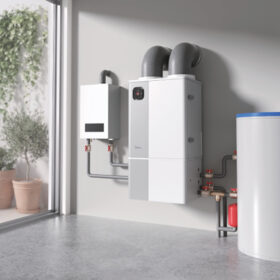
Midea unveils PV-compatible indoor heat pump for space-constrained residential applications
Midea has launched a compact indoor air-source heat pump for retrofit and space-constrained homes. The R290-based system offers up to 4.45 kW output, a coefficient of performance of 4.5 and smart PV-compatible controls.

BBDF 2026: How financing standalone vs. co-located projects really works
The “lab” session at Battery Business & Development Forum 2026 made transparent how different stakeholders evaluate and view energy storage projects between standalone and co-located options, and where views diverged.

Can sodium-ion storage drive energy flexibility in France?
France’s Association Environnement Juste has proposed a storage mandate for renewables projects exceeding 10 kWp in order to integrate flexibility at the source. The association argues European sodium-ion batteries could present an economically and environmentally viable solution, capable of stabilizing grids without depending on imported metals.
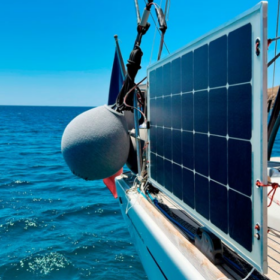
Solbian launches solar kit for boat davits
Available in 80 W and 108 W versions using high-efficiency SunPower Maxeon cells, the kit offers wind resistance up to 25 m/s and easy installation on unused boat surfaces, according to the manufacturer.
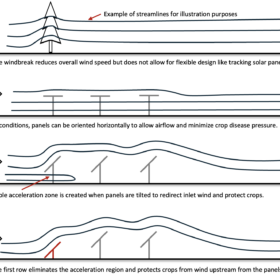
Tracker-based agrivoltaics turn fields into wind-safe zones
Cornell University researchers demonstrated that tracking solar panels in agrivoltaic systems can protect crops from wind damage while allowing airflow, outperforming traditional single-row tree windbreaks. They also proposed a new lowered-first-row panel design that improves wind protection, achieving up to 86% reduction in shelter-zone wind speeds under extreme conditions.

Ion beam technology offers pathway to low-defect silicon solar cells
Researchers in India demonstrated that ion beam implantation enables precise boron doping in silicon solar cells, reducing defects and improving charge transport. The proposed approach could support more efficient and reproducible p–n junctions, offering a pathway to higher-performance silicon photovoltaics.

Solar parks reshape soil biodiversity, plant traits
A study of 20 solar parks in southern France found that soil biodiversity and respiration drop significantly under panels, especially in mown areas, while plant traits like height and leaf area can increase under grazing. The researchers highlighted that climate, management type, and solar shading all shape soil and plant responses.
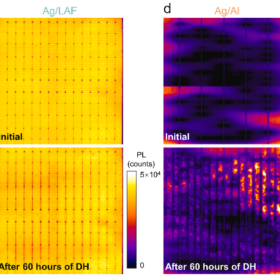
UNSW unveils new ageing method to assess TOPCon solar module degradation
UNSW researchers developed a chemically selective, nitrate-based, single-sided accelerated ageing method for TOPCon solar cells that replicates the mildly acidic environment inside EVA-encapsulated modules. The proposed approach enables rapid, physically meaningful screening of front-side metallisation stability, reliably predicting module-level degradation and reducing development time and costs, according to its creators.
JinkoSolar drops Vietnam solar manufacturing project
JinkoSolar has formally terminated its 4 GW Hai Ha solar cell project in Vietnam, citing US antidumping duties that undermined its export economics. The company will maintain other Vietnamese operations while shifting focus to localized supply chains and Asia-Pacific and Middle East markets.
