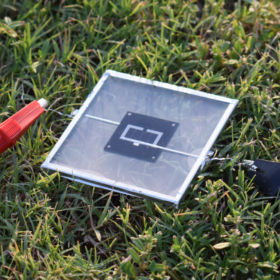
How temperature affects tandem solar cell performance
New outdoor tests conducted at Saudi research center King Abdullah University of Science and Technology (KAUST) have shown that an increase in temperature affects the performance of a tandem perovskite/silicon solar cell not only because of voltage losses but also because of current mismatch between the two sub-cells.
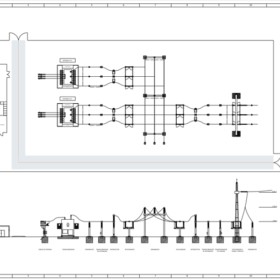
New algorithm to connect solar parks to substations
Spanish PV software specialist RatedPower has developed a new algorithm that purportedly offers a way to efficiently design grid interconnections.
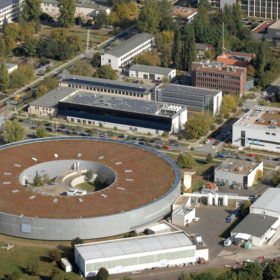
Shedding light on amorphous silicon
Scientists in Europe took a very close look at the thin amorphous silicon layers used in heterojunction and tandem solar cells, building a full picture of the material’s structure at the nanoscale. Their findings could help scientists solve the long-standing mystery of light induced degradation.
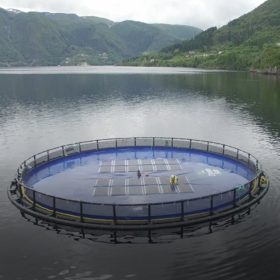
Cooling effect of water for floating PV arrays
Norwegian researchers have quantified the cooling effect of water in direct contact with floating PV arrays. They tested a computational fluid dynamics model to estimate U-values and used it on a 6 kW floating system deployed by Ocean Sun.
Best tech for intermediate-band solar cells
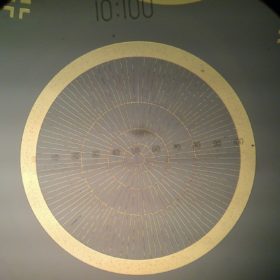
Researchers in Spain have analyzed the most important technologies for the development of intermediate-band solar cells (IBSC), a solar PV technology that was conceived to exceed the Shockley–Queisser limit. They identified four established technologies that are currently being adopted to manufacture IB materials and IBSC prototypes. Their future goal is to find the appropriate material to fabricate cheap and very efficient IBSCs.

Solar-powered cooling system for crop storage
South African scientists have used a PV system to keep tomatoes in cold storage. They linked an air-cooling system and evaporative cooling tech to a 3.5 kW array and 12 batteries and tested it for 28 days in September.
Hybrid salp swarm algorithm for MPPT optimization
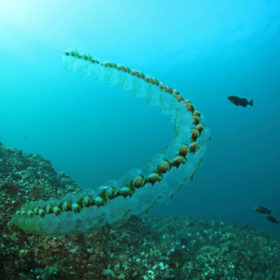
Indian researchers have created a hybrid salp swarm algorithm to optimize MPPT tracking in PV systems under partial shading conditions. It is based on the swarming behavior of salps in the ocean.
Omnidirectional anti-reflective coating from Canada
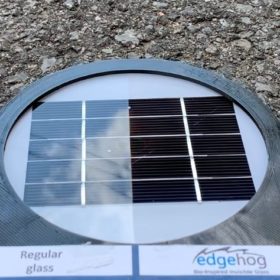
Founded in 2018, Edgehog Advanced Technologies has developed an omnidirectional anti-reflective glass for solar panels, which increases their production, especially at the start and end of the day.
Enel to combine floating PV, hydropower
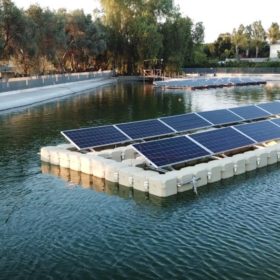
The Italian utility is testing several technologies at a floating PV array in Sicily. It wants to select the most promising ones for future large-scale projects in the reservoirs of its hydropower plants throughout the world.
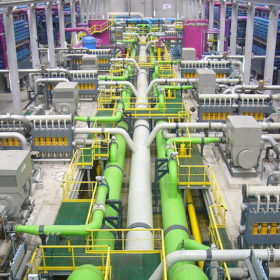
PV powered desalination is “the most competitive design”
Scientists in France conducted an analysis on the competitiveness of water desalination, taking a large scale project planned for Morocco as a case study. The research concludes that PV without storage is the cheapest option to power desalinators, and will likely remain so until at least 2030.
