
Open-source method to build flexible floating PV systems
A U.S.-Finnish research team has developed an after-market method to adapt commercially available flexible thin-film solar panels for applications in floating PV projects. The special panel design can be applied to three types of floating materials, including neoprene, mincell, and polyethylene.
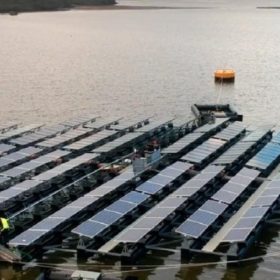
‘Floating PV systems are storm-resistant’
Netherlands-based Floating Solar says its pilot floating PV project at the port of Rotterdam has been able to withstand four severe storms.

Dual-ion battery prototype promises safe and cost-competive energy storage
Scientists have fabricated a working battery using a new type of dual-ion chemistry. The design avoids many of the rare or expensive materials found in today’s lithium-ion batteries, and also comes with an inherently lower risk of fire. The battery showed promising performance, and its creators say they have identified several areas where performance could potentially be improved.

French consortium wants to mobilize €1 billion for agrivoltaic projects
Sun’Agri and RGreen Invest have launched an initiative aimed at deploying around 300 agrivoltaic projects in France by 2025.
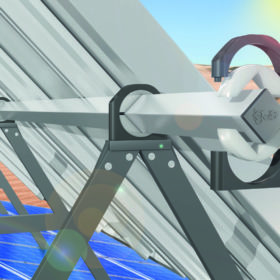
Lubrication-free pedestal bearings to align solar modules
According to the manufacturer, the range of its pedestal bearings for the solar sector has a service life of more than 72 years.
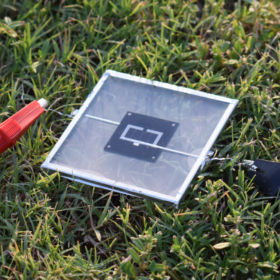
How temperature affects tandem solar cell performance
New outdoor tests conducted at Saudi research center King Abdullah University of Science and Technology (KAUST) have shown that an increase in temperature affects the performance of a tandem perovskite/silicon solar cell not only because of voltage losses but also because of current mismatch between the two sub-cells.
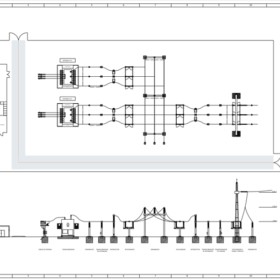
New algorithm to connect solar parks to substations
Spanish PV software specialist RatedPower has developed a new algorithm that purportedly offers a way to efficiently design grid interconnections.
Shedding light on amorphous silicon
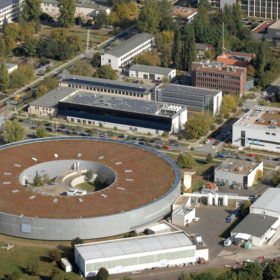
Scientists in Europe took a very close look at the thin amorphous silicon layers used in heterojunction and tandem solar cells, building a full picture of the material’s structure at the nanoscale. Their findings could help scientists solve the long-standing mystery of light induced degradation.
Cooling effect of water for floating PV arrays
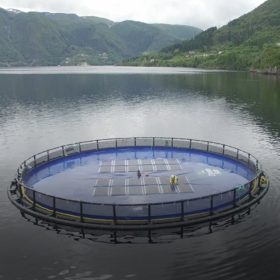
Norwegian researchers have quantified the cooling effect of water in direct contact with floating PV arrays. They tested a computational fluid dynamics model to estimate U-values and used it on a 6 kW floating system deployed by Ocean Sun.
Best tech for intermediate-band solar cells
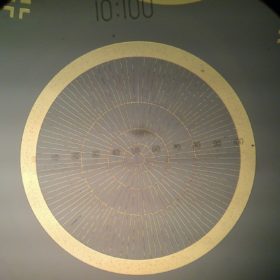
Researchers in Spain have analyzed the most important technologies for the development of intermediate-band solar cells (IBSC), a solar PV technology that was conceived to exceed the Shockley–Queisser limit. They identified four established technologies that are currently being adopted to manufacture IB materials and IBSC prototypes. Their future goal is to find the appropriate material to fabricate cheap and very efficient IBSCs.
