
Using the oceans’ depths to store renewables, compress hydrogen
Underwater gravity energy storage has been proposed as an ideal solution for weekly energy storage, by an international group of scientists. The novel technology is considered an alternative to pumped-hydro storage for coasts and islands without mountains that are located close to deep waters, and may also be interesting for PV if used to store green hydrogen.
Hybrid wind-solar could make green ammonia cost-competitive in niche markets by 2030
According to a new study from the LUT University, hybrid wind-solar plants offer the ideal profile to reduce the costs of green ammonia. Although natural gas will be able to provide lower prices over this and the next decade, beyond 2040 ammonia generated by wind and solar may reach a price of between €300 and €330 per ton.
The Hydrogen Stream: 20 MW electrolyzer in Spain, hydrogen alliance between Russia and Germany
BP, Iberdrola and Enagás will power a 20 MW electrolyzer with 40 MW of solar in Spain. Automotive manufacturers Hyundai, Stellantis, Toyota and BMW sent a letter to European Commission Vice-President Frans Timmermans asking to support the continued expansion of a 700 bar hydrogen refuelling network in Europe.

The Hydrogen Stream: Offshore hydrogen pipeline and more electrolysis capacity in Germany
Big German conglomerates such as Siemens, RWE and Vattenfall keep pushing for green hydrogen development through different projects. Germany’s first offshore hydrogen pipeline is being planned by RWE itself, Shell, Gascade and Gasunie, and should be commissioned in 2035. Siemens is planning hydrogen projects in the 5 MW to 50 MW range, for industrial and mobility applications.
Mathematical model to couple pumped hydro with wind and solar in islands
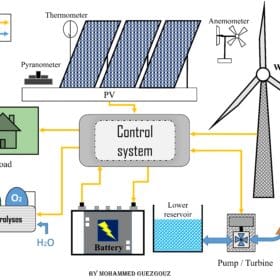
An group of international scientists has developed a mathematical model to design hybrid renewable energy systems relying on pumped hydro storage for islands. According to their analysis, which was applied to the Ometepe island in Nicaragua, a similar system could provide a cost of energy ranging from €0.047/kWh to €0.095/kWh.
Model agreement to make solar and wind share same connection point in the Netherlands
The model agreement was outlined by Dutch consultancy Ventolines B.V. and follows the introduction of new provisions for the sharing of the same connection point issued by the country’s government last year.
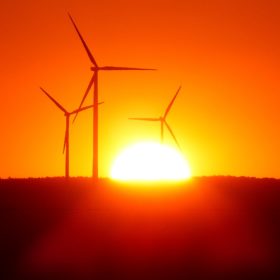
India tenders 1.2 GW of hybrid wind-solar projects
Projects selected in the procurement exercise will sell power to the Solar Energy Corporation of India (SECI) under a 25-year PPA.

Iberdrola, Mapfre set up renewable energy joint venture
The new company, which will be majority-owned by the Spanish insurance group, is currently developing 130 MW of photovoltaic projects across Spain.
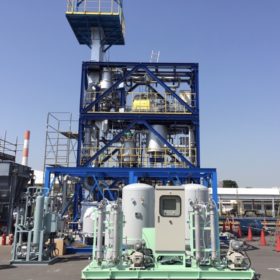
The Hydrogen Stream: Projects move forward in China, Japan, Australia and across several European countries
Sinopec wants to build 1,000 hydrogen refueling stations by 2025. Ways2H is building a facility in the Tokyo area that will convert daily 1 ton of dried sewage sludge into 40-50 kilograms of hydrogen for fuel cell mobility and power generation. Ørsted wants to deploy two renewable hydrogen production facilities for a total of 1 GW by 2030. Wacker Chemie is planning to produce green hydrogen and renewable methanol at its German site.
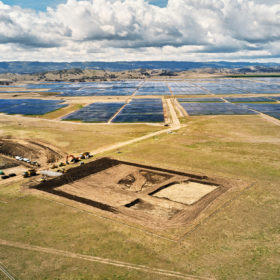
Apple’s suppliers embrace renewable energy
The move is part of the U.S. technology company’s 2030 plan to rely 100% on renewable energy.
