
Google buys power from another 1.6 GW of renewables
The new deals worth $2 billion in new investments were made by the Internet giant in in the U.S., Chile and Europe.

Solar-plus-storage for social housing
U.K. nonprofit organization Together Housing is launching a solar-plus-storage demonstration project in a social housing complex. The $2.4 million pilot is designed to identify alternative commercial models for residential storage, following the abrupt reduction of feed-in tariff rates.

Solar, renewables and hydrogen for greener marine transport
A new report in Sweden suggests that renewables are an ideal source of power for marine vessels, based on a case study in which solar PV and proton-exchange membrane fuel cells, combined with a diesel generator, were used to reduce the greenhouse gas and particulate emissions of cruise ships by almost 10%.

Climate strike!
As of 11.30 CEST, the global pv magazine team in Berlin will down tools to attend the global climate strike at Brandenburger Tor.
Open PV Project goes offline
The US Department of Energy has shut down the site for its Open PV Project, which supplied cost and installation data. Is this the winding down of a project whose time had come, or is the administration of President Donald Trump closing off another data source on renewable energy?
Indian renewables leaders split over need for regulation
While some of the industry insiders at REI 2019 have made predictable calls to scrap restrictions imposed by regulators, others have continued to maintain that policy support is crucial, while audience members voiced concerns about India’s lack of recycling rules.
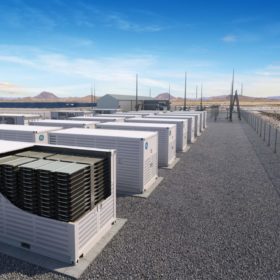
GE to supply 100 MW/300 MWh battery for South Australia solar farm
GE Renewable Energy has been chosen to supply a massive battery for the 200 MW Solar River Project in South Australia.

Amazon pledges zero emissions by 2040
Amazon unveiled a number of new climate initiatives this week, including 80% renewables by 2024, zero emissions by 2040, a fleet of 100,000 electric vans and a $100 million investment in reforestation measures.
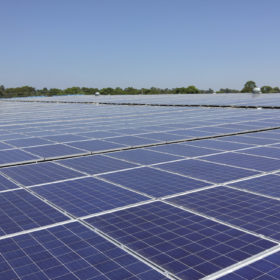
Fitch predicts a decade of corporate renewable power procurement growth in the US
Growth in U.S. solar and wind generation capacity will average 7.9% and 3.9%, respectively, between 2022 and 2028 according to Fitch Solutions, who projects almost 120 GW of solar power to be deployed in that period. Corporate clean energy buyers are to be a large part of the trend, and to accelerate deployments during the period.

UK scientists find way to cut down indium
A research team led by the University of Liverpool has developed a transparent conductive oxide material to replace tin with molybdenum. The results demonstrated better performance and potentially lower material costs than the transparent conducting layers used in today’s commercial solar cells.
