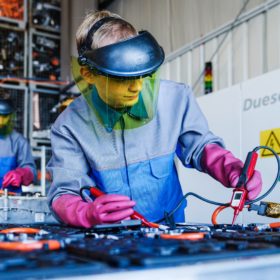
‘Europe’s battery recycling quotas are blunt and a decade too late’
Last week, the European Commission announced it plans to implement sustainability standards for Europe’s growing battery industry. Consultant Circular Energy Storage published a report on lithium-ion battery life cycle and recycling economics this month and its findings ask tough questions of the commission’s proposals.
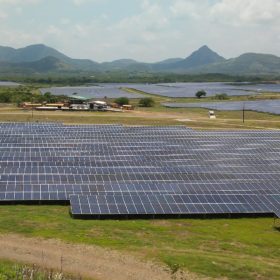
Improving PV-based hydrogen generation with loss‐mitigation techniques
Australian scientists have demonstrated two loss-mitigation techniques that could improve solar‐to‐hydrogen (STH) conversion efficiencies and may lay the ground for cheaper PV-powered hydrogen generation. By combining the two techniques, they were able to achieve an STH efficiency of around 19.4% at realistic operating temperatures.
What is the UK government’s problem with solar?
You’ll need to pay close attention to find the few mentions of solar in the long-awaited White Paper issued by the government to outline how it plans to hit net zero by mid century.

Another 300 MW of solar power for Egypt’s Aswan region
UAE-based AlNowais Investments Company has been allowed to increase the size of its solar project in Kom Ombo from 200 to 500 MW. The facility will sell power to the Egyptian Electricity Transmission Company (EETC) under a long-term, bilateral PPA.
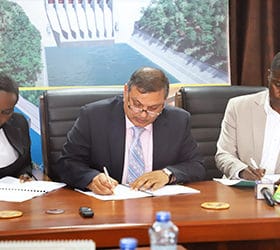
Tanzania buys solar power from small independent power producers
Three solar plants totaling 15.4 MW will sell power to Tanesco under a PPA. The projects are being developed under new rules enabling independent power producers to participate in the country’s energy market.
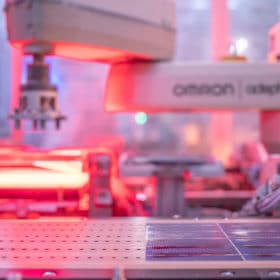
Another decade of PERC
A new paper from scientists at Germany’s Fraunhofer Institute for Solar Energy Systems (ISE) examines the entire history of PERC technology, from its beginnings in laboratories more than 40 years ago to today, where it represents the majority of all PV cell production. And this story is far from over, as ISE lays out a pathway to efficiencies of 26% as well as use as the bottom cell in a tandem device that it believes will keep PERC technology in mass production to 2030 and beyond.
Competition in transmission sector will drive Indian renewables
Intra-state transmission infrastructure is the weakest link in the Indian grid. However, the introduction of competition from private players could help to drive down construction costs and promote timely completion of projects.
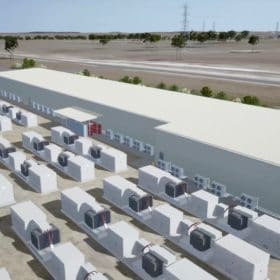
ING finances 100 MW/150 MWh storage project in Australia
Vena Australia has reached financial close on its Wandoan South Big Battery, thanks to ING Australia. The international bank is increasingly financing green energy projects, but this is the first standalone battery project it has financed in the Asia Pacific. Vena Energy Australia says this phase is just the beginning of a project that is to feature 650 MW of solar PV and 450 MW of battery storage.
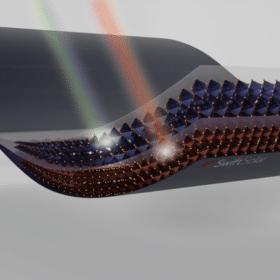
Swift Solar secures financing to expand perovskite R&D
The financing round was led by GitLab CEO Sid Sijbrandij and cryptocurrency expert James Fickel. The company will use the proceeds to expand R&D, develop prototypes and add staff.
The US deployed 3.8 GW of solar in Q3
According to the Solar Energy Industries Association (SEIA) and Wood Mackenzie, solar accounts for 43% of all new electric generating capacity additions through Q3 2020, more than any other electricity source.
