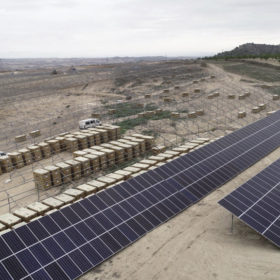
Galp to buy ACS solar assets for €2.2 billion – enough to rebuild Real Madrid
Portuguese gas company Galp Energía says it will become “the largest solar energy company in the Iberian peninsula”. The agreement includes operating PV plants with an installed generation capacity of 900 MW plus a further 2.9 GW under development.

Deal reached to keep Energyra module production in the Netherlands
The Dutch PV manufacturer plans to start production this year after a last-minute rescue package arrived as the company’s equipment was being auctioned off.

Navajo Nation land could host 2.2 GW pumped hydro storage station
The Federal Energy Regulatory Commission has accepted Daybreak Energy’s application to develop a 2,230 MW pumped-hydro facility on the banks of Lake Powell in Utah.
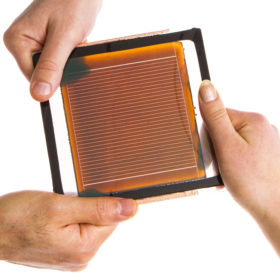
Perovskites meet the stability standard
European research group Solliance says its perovskite modules have passed three key industry standard reliability tests: Light soaking, damp heat and thermal cycling. The group said it is the first time perovskite modules of that size have achieved such results and represents a milestone in the technology’s move toward commercialization.

Qatar’s 800 MW tender draws world record solar power price of $0.01567/kWh
Utility Kahramaa has revealed the winning consortium initially offered $0.01745/kWh with the price then reduced based on financial market indices.

Solving seasonal storage with aluminum cycling
Scientists at Switzerland’s University of Applied Sciences Rapperswil have demonstrated an aluminum conversion process which could be valuable for long-term renewable energy storage. Simulations suggest that by employing the process, a new multi-family building in Switzerland could meet all its energy demand from a 7-11 kWp solar system.
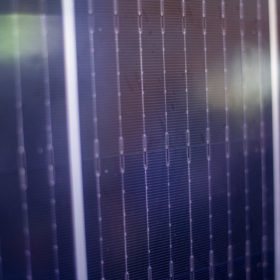
A new front electrode structure for shingled PV panels
Researchers in Korea have proposed a new design for dividing and bonding which is said to provide higher efficiency from fewer fingers. The number of fingers optimized for division into five cells was 128 and for three, 171. Five offer power conversion efficiency of 17.346% and three 16.855%.
Germany tops global league table for renewable energy
A list compiled by a British price comparison website draws upon data from German company Statista which shows clean energy – including hydro – made up 12.74% of the nation’s power mix at the end of September.
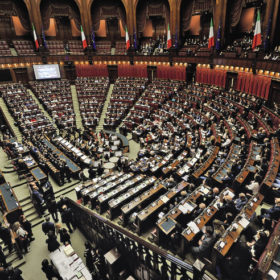
Broken promises: Legal recourse for retroactive FIT cuts
Generous feed-in tariffs, a short-lived boom and retroactive cuts – the early stages of large-scale solar deployment in Europe followed a regrettable pattern. Project developers have increasingly turned to the legal system for restitution, and many have been successful, writes Daniel R. Meagher, a partner in Winston & Strawn’s international arbitration practice.

Congolese president makes off-grid renewables pledge
Félix Tshisekedi reportedly said he wants to use standalone energy units, such as solar home systems, to bring electricity to at least 21 million people in the next nine years.
