
Solar noise barriers require high self-consumption rates
Dutch contractor Heijmans has deployed a solar noise barrier to test three different PV module technologies, including cadmium telluride, CIGS, and crystalline products. Initial analysis has shown unexpectedly low returns, due to the rates at which the installation is selling power to the grid. But high levels of self-consumption could make such designs competitive with conventional noise barriers.
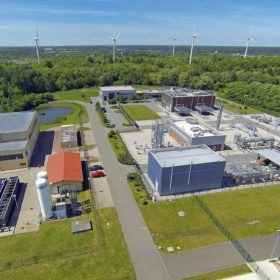
German gas provider builds cavern for hydrogen storage
The hydrogen storage cavern will be built near Berlin at a depth of around 1,000 meters and measuring 500 cubic meters. It is scheduled to go into operation in spring 2022.

Batteries and hydrogen to make residential off-grid PV technically feasible
Researchers in Finland have demonstrated the technical feasibility of an off-grid residential PV system combined with short-term battery storage and seasonal hydrogen storage. The proposed model is applicable only to northern climates, as higher levels of solar radiation in southern locations would mean a reduced need for seasonal storage. It was tested in an existing single-family house in Finland with a 21 kW rooftop array and a ground source 6 kW heat pump.
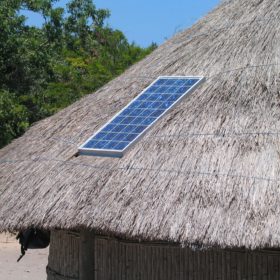
Somali solar providers can apply for grants from $8.5m pot
Solar distributors and service providers and microfinance businesses which are rolling out PV systems in Somalia and the self-declared Republic of Somalil and have been offered access to grants from development donors.

Indian Railways seeks proposals for solar+storage project
The Indian rail operator aims to set up a PV project in Dahod, Gujarat. It will be awarded via a competitive bidding process. Western Railways will serve as the off-taker for a period of 25 years.
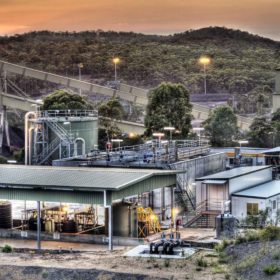
Hydro storage project pumps new life into old Australian mine
Centennial Coal has secured more than US$3.8 million in government funding to assess the feasibility of turning a coal mine near Newcastle, New South Wales, into a pumped hydro storage site that could supply 600 MW of renewables to the grid.
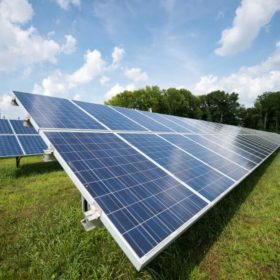
NIPSCO adds solar capacity through a 280 MW PPA
The Indiana utility plans to be coal-free by 2028 by adding a combination of cleaner energy sources to its existing mix of natural gas and hydroelectric generation.
Editorial leadership changes at pv magazine USA
Eric Wesoff becomes Emeritus Editor and David Wagman joins as Senior Editor U.S.
Germany introduces new renewable energy law
Under the new regulatory frameworks, the feed-in tariff scheme for rooftop PV will be maintained although only PV systems with a power output of up to 300 kW will be entitled to have the FIT at current levels. Installations ranging in size from 300-750 kW will receive only half of the payment. Owners of the latter scale of system, however, will be allowed to self-consume the generated energy.
Crossboundary offers up its mini grids business model for African peers to benefit
The Kenyan financial services business has been developing rural mini grids across Africa and has announced plans to show its rivals how such networks can thrive, in a bid to accelerate access to electricity on the continent.
