
SMA exceeds €1bn in sales for first time since 2012
German inverter manufacturer SMA has managed to shake off the impact of the pandemic by posting strong revenue and profits for 2020.
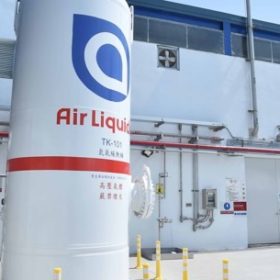
The Hydrogen Stream: Siemens targets $1.50/kg by 2025, BP and Saudi Aramco bet on blue hydrogen
The German company expects to roll out its in-house proton exchange membrane (PEM) electrolysis technology to implement a gigawatt production of electrolyzers. BP partners with UK gas distributor Northern Gas Networks (NGN) to develop blue hydrogen and Saudi Aramco teams up with Hyundai Heavy Industries to do the same. Italy’s Snam wants to build hydrogen projects in the United Arab Emirates.
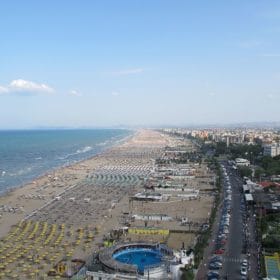
Adriatic Sea to host 100 MW offshore PV plant
Italy’s Saipem is planning what could be the world’s largest offshore PV plant — a 100 MW facility located off the coast of the Italian northern region of Emilia-Romagna. The project, whose approval process began two years ago, is expected to become operational by the end of 2025.
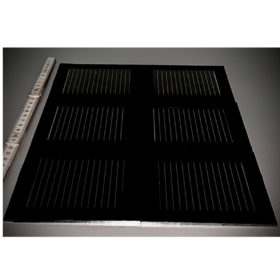
Perovskite solar module with 17% efficiency
A research team led by the University of Rome Tor Vergata in Italy has fabricated a perovskite solar module with a total active area of 42.8 cm2 and aperture area of 50 cm2. The panel was built with 20%-efficient perovskite cells connected in 14 series and was able to retain 90% of the initial efficiency after 800 h of thermal stress at 85° C.
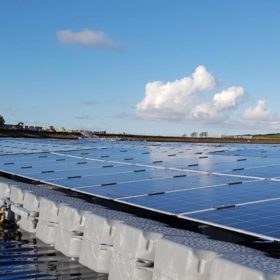
How much floating PV is enough?
Scientists in the UK have had a closer look at the impacts of floating PV systems on the water. They found that their cooling effect on water mitigates blooms of toxic blue-green algae and increased water evaporation, which are both caused by global warming. They also warned, however, that colder water may result in a reduction of the duration of so-called thermal stratification. The right proportion between the surface occupied by the PV array and a water surface’s total area is key for addressing this issue.
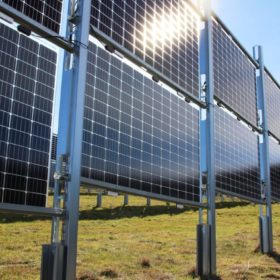
Cost comparison between agrivoltaics and ground-mounted PV
Researchers in Germany have stated that agrivoltaic projects are still considerably more expensive than ground-mounted PV plants. They found the agrivoltaic developers may incur higher costs during the approval process or due to design constraints. Furthermore, the use of special components such as modules, mounting systems and trackers may significantly increasing a project’s cost, especially if vertical plants are planned or the modules must be elevated to let the agricultural machinery operate underneath.

Tunisia’s 70 MW PV tender attracts lowest bid of €0.035/kWh
The Tunisian authorities will review 57 project proposals in the country’s latest solar tender, which will facilitate the construction of six PV plants with installed capacities of 10 MW each, as well as 10 smaller solar arrays.
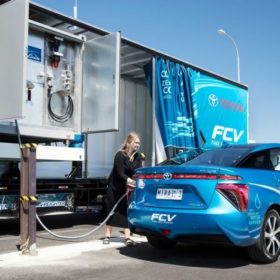
Australia’s first hydrogen refueling station opens in Canberra
Neoen and ActewAGL have opened Australia’s first hydrogen vehicle-refueling station in Canberra. It will cater to the state government’s new fleet of Hyundai Nexo hydrogen cars.

Solar could supply half of India’s clean energy aims
U.S.-based researchers have modeled the costs of achieving 200 GW, 400 GW and 600 GW of renewable-energy capacity in India within this decade. They said PV should account for no more than half of all generating capacity and have urged policymakers to shift their focus to wind power.
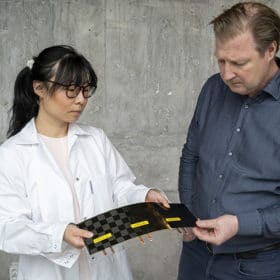
‘Massless’ battery breakthrough for lightweight EVs
A new type of carbon fiber and electrolyte matrix stunned scientists when they tested its properties. Their ‘structural’ battery could be used in electric vehicles and could even address the weight problems that bedevil devices planned for electric-powered flight.
