
Canadian gas giant to build 325 MW pumped hydro project in Australia
Canadian behemoth Atco has purchased the rights to develop the 325 MW Central West Pumped Storage Hydro Project in Central West New South Wales and credits the investment to policy certainty from the NSW Government. As a significant firming agent the project is ideally placed in the state’s proposed Central West-Orana Renewable Energy Zone.
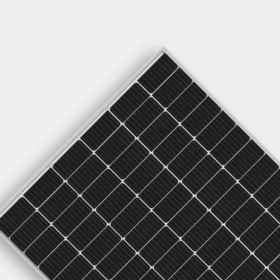
Longi launches 420 W panel for rooftop applications
The monocrystalline module provider added a new product to its Hi-MO 4 series. The new panel has a power output of 410/420 W and a conversion efficiency between 20.5% and 21.0%. The width of the module is standardized, while three different length options can be chosen to maximize capacity in a rooftop project.
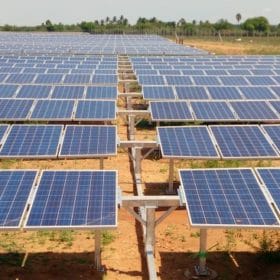
Financing large scale renewables in emerging economies
pv magazine has taken part in a webinar examining the thorny issue of financing clean energy generation in developing markets.
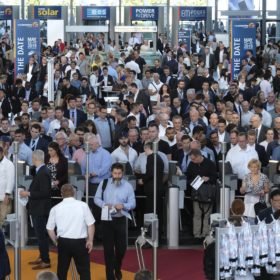
The Smarter E Europe postponed to July
The organizers of Intersolar and Ees Europe, in Munich, the largest photovoltaic and storage trade fairs in Europe, have decided to postpone the two events by six weeks. They hope that in the second half of the year there will be fewer restrictions and that the summer will have a dampening effect on the coronavirus pandemic.
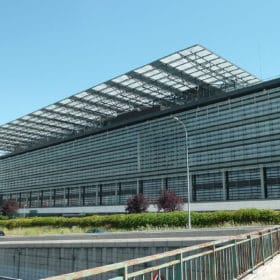
Spain’s Endesa unveils ambitious plans for green hydrogen
The Spanish power utility announced it wants to deploy 23 green hydrogen projects by 2024. The company plans to build around 340 MW of electrolyzer capacity.

Germany installed 4.88 GW of solar in 2020
The country saw around 525 MW of new PV capacity come online in December alone. The feed-in tariffs for PV systems not exceeding 750 kW in size were reduced by 1.4%.
India’s state power companies invited to develop 5 GW of solar
The PV projects – tendered under the Central Public Sector Undertaking scheme – will be entitled to government support through ‘viability gap funding’, with the level awarded determined by reverse-bidding auctions for the project capacity.

Turkey sets fixed tariff for licensed PV projects
Large scale PV projects selected in public tenders held by the Turkish authorities will be awarded a 10-year tariff of TRL0.32/kWh ($0.044). The tariff will be indexed to inflation and dollar-euro exchange rate.

GCL-Poly cross defaults over unpaid $500m senior notes
Creditors refused to postpone payment of the three-year notes for another 36-month term and now face receiving less than 5% of the amount due once a proposed debt restructure is completed, with the balance kept back until January 2024 regardless.
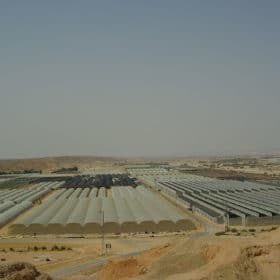
Israeli government wants to boost development of agrivoltaics
The Israel Ministry of Energy and the Ministry of Agriculture have decided to implement a pilot research program to assess the feasibility of agrivoltaic projects in the country. The possibility of combining PV and agriculture in a land with limited land availability and increasing energy demand is considered a win-win solution by the government.
