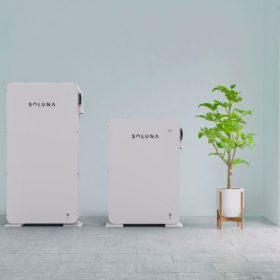
Soluna unveils 20kWh battery for residential and commercial applications
The Chinese manufacturer says the battery has a depth of discharge of 95%. It will be available for sale starting from Q1 2022.
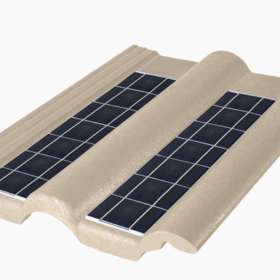
New solar tile from Brazil
Developed by Brazilian construction materials provider Eternit S.A., the tile has a nominal power of 9.1 W and an average monthly generation capacity of 1.15 kWh. It is available in five colors and two versions with a classic or reinforced design.
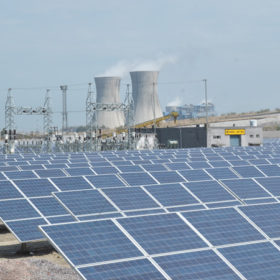
India to replace thermal power with renewables under existing PPAs
Indian generators and distribution companies will evenly split the gains achieved by bundling cheaper renewable energy with high-cost thermal sources.
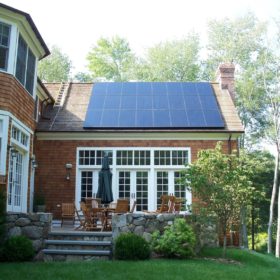
Fire risks for rooftop solar
A recent study by Clean Energy Associates showed that 90% of inspected rooftops had significant safety and fire risks. Here’s how to protect your solar asset.
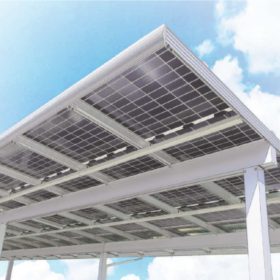
Scalable turnkey solar carport solution for commercial applications
Japanese energy company Sinanen offers a scalable solar carport that can host a minimum of four vehicles and can be deployed in the parking areas of factories and commercial buildings. The basic system is offered with a minimum capacity of 10.80 kW.

The Hydrogen Stream: Toyota and Kawasaki want to develop hydrogen engine
Kawasaki Heavy Industries and Yamaha Motor revealed plans to develop hydrogen engines for two-wheeled and other vehicles. Meanwhile, France-based Hyvia has announced two new prototypes of hydrogen-powered light commercial vehicles, Germany’s ThyssenKrupp is considering listing its hydrogen business in an initial public offering (IPO), and Potruguese utility EDP said it wants to invest in 1.5 GW of renewable hydrogen by 2030.
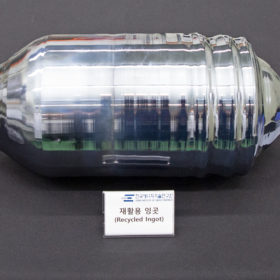
New tech to produce ultra-thin wafers with minimal silicon waste
South Korean researchers have developed a process to produce ultra-thin wafers without sacrificing any of the substrates. Their technique is based on a new approach involving the use of plasma-assisted epitaxial growth, in order to increase internal defects and porosity, rather than reduce them.
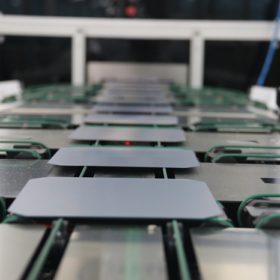
Chinese PV Industry Brief: Shuangliang secures another major wafer supply deal
The Chint group has also agreed to sell a portfolio of distributed solar projects with a capacity of 493 MW.

How to convert coal mine goaves into pumped hydro storage facilities
According to Chinese researchers, using abandoned coal mine goaves for pumped hydro facilities in combination with large scale solar and wind is not only technically feasible but can also provide an efficiency of 82.8% in yearly operation cases. They applied the model to wind and solar-rich northwestern and southwestern China.

Solar module prices will stay high until 2023, IHS Markit says
IHS Markit predicts that global installed solar PV capacity will grow by 20% to over 200 GW in 2022, despite a difficult cost environment. PV system costs are expected to resume their downward trend from 2023, when more polysilicon capacities will come into operation.
