
Keeping track of chlorine in perovskite stability
Scientists in Japan delved deep into the crystalline structure of a perovskite solar cell in order to understand how chlorine helps to improve the cells’ stability. By varying the concentration of chlorine in the material they were able to find an optimal level for increased stability, and open new doors on the way to understanding the specific role of chlorine and the mechanism behind the improvement.
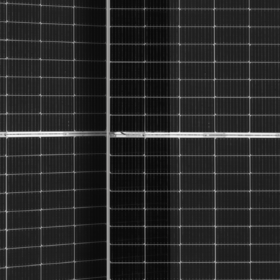
JinkoSolar’s n-type TOPCon cell achieves 24.58% efficiency via hydrogenation treatment
The Chinese manufacturer and the University of New South Wales (UNSW) have improved the average cell efficiency by 0.68% through a post-cell hydrogenation process. The cell’s average open-circuit voltage increased by 7 mV from 696 to 703 mV, and the average fill factor from 82.03% to 83.07%.
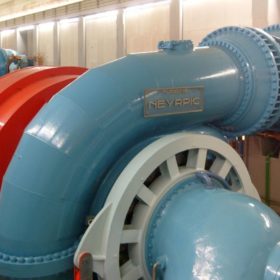
Indonesia moves forward with 1 GW pumped storage hydropower plant
The World Bank has agreed to finance part of a project owned by Indonesian state-owned utility, PLN. The facility is planned to enable a larger penetration of renewable energy to provide with power two large demand centers in West Java.

Proposals received for latest version of delayed Kuwaiti gigasolar project
With the Dabdaba/Al-Dibdibah solar field now having been combined with the Shagaya clean energy development, bids for the former’s EPC contract were reportedly received last week. It is unclear whether the facility will have a generation capacity of 1 GW, 1.5 GW or ‘up to 3 GW.’

Solar in uncommon spaces
With land-use concerns on the rise, large-scale solar projects are increasingly being built on everything from landfill sites to water reservoirs. Here’s an overview of the state of the art.
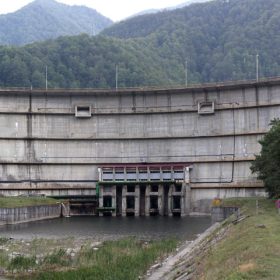
Romanian hydropower producer enters PV business with 45 MW ground-mounted project
The project will be built in Brăila county, southern Romania, at a cost of approximately $42.6 million. Hidroelectrica also wants to build several floating solar plants, totaling 5 MW, at some of its hydropower facilities.
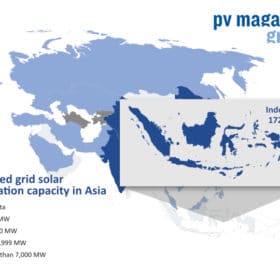
Regional strategy to turbocharge Indonesian solar
A roadmap to rapid carbon emission reduction has suggested the nation add 2.4 GW of generation capacity next year as part of a 15 GW new-solar target this decade. The claims of solar-plus-storage should be ignored for now, according to a new policy document, because batteries will make PV less competitive with coal.
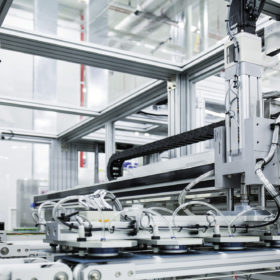
Hanwha Q Cells unveils plan to produce perovskite, TOPCon solar modules
The $1.28 billion plan includes a 3.1 GW production capacity expansion in South Korea, where the company’s solar module capacity will reach 7.6 GW by 2025.
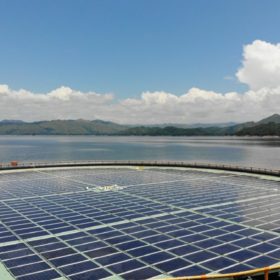
The world’s first large scale hybrid hydro-floating solar power plant
A Norwegian consortium led by Scatec is planning to build a hybrid hydropower-floating PV plant at an unspecified location in West Africa. Building both facilities simultaneously will help its developers define a series of parameters for proper sizing, optimization and design, and set a benchmark for future projects of this kind.

Impact of increasing PV module prices on Indian market
Modules account for a huge percentage of a project’s total costs, and given that independent power providers have lower margins in the Indian solar energy sector, even a small increase in module pricing can put them under more strain.
