Module and shipping cost inflation could cost the world 50 GW of solar next year
The input costs of the two biggest contributors to solar plant development expense have gone through the roof since the world began to come out of Covid-19 lockdowns, to leave project developers with some difficult choices.
Taxes set to push up solar energy tariffs in India
The recent increase in the goods and services tax applied to solar cells and modules, from 5% to 12%, coupled with a planned 40% customs duty on panel imports, is set to increase project costs for developers.
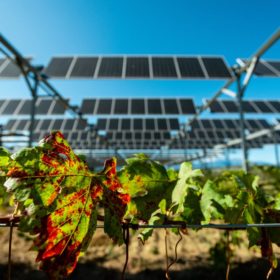
‘Italy can be a laboratory for agrivoltaics’
Efforts are being made to come up with a less convoluted approach to planning farm-based solar systems, in the only EU member state which explicitly apportioned funds for agrivoltaics in its post-Covid spending plans.
Polish distributor launches 250 MW module procurement in response to rising solar panel prices
Menlo Electric said the procured modules will be primarily offered to B2C and B2B installers across Central Europe.

Solaria announces initial favorable ruling in patent dispute with Canadian Solar
According to a statement released by the Californian manufacturer, the U.S. International Trade Commission (ITC) issued an initial determination finding that Canadian Solar may have violated two U.S. patents covering Solaria’s shingled photovoltaic panels.
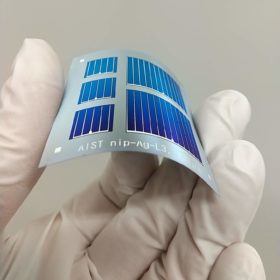
Japanese scientists build 23.27%-efficient heterojunction solar cell with 56.2μm-thick wafer
The 4cm2 cell showed a remarkable open-circuit voltage of 754 mV. It was fabricated with a hydrogenated nanocrystalline silicon (nc-Si:H) layer, which is said to show lower parasitic absorption and higher external quantum efficiency.
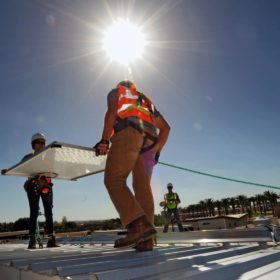
Large format modules present a new set of challenges
As modules change in size and form factor, ripple effects are felt across the entire solar industry, requiring tweaks, modifications, and outright changes to longstanding project development and construction practices.
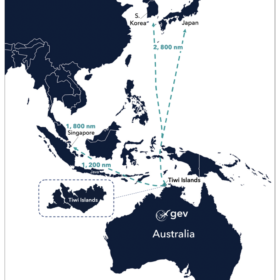
Australian hydrogen ship maker to develop 2.8 GW green facility
Compressed hydrogen ship maker Global Energy Ventures will develop a 2.8 GW green hydrogen export project on the Tiwi Islands, off the coast of the Northern Territory. It says the project will demonstrate the simplicity and efficiency of compressed hydrogen for Asia-Pacific supply chains, and will of course use a fleet of its own hydrogen-powered and hydrogen carrying 430-tonne ships.

Dragon scale solar tiles installed on Google buildings in Silicon Valley
Some 90,000 individual solar panels will generate enough electricity to cover around 40% of the electricity used in two buildings for Google.

The Hydrogen Stream: Saudi Arabia bets on blue hydrogen, Denmark wants to improve green alkaline electrolysis
Elsewhere, Snam and Toyota are pushing for more hydrogen-based mobility in Italy, and Woodside Petroleum wants to establish an export-oriented hydrogen and ammonia production facility in Australia.
