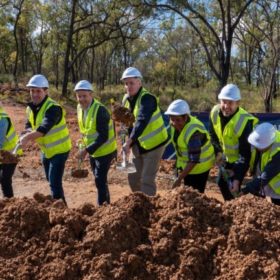
Australian developer begins work on 1.2 GW wind-solar hub
Squadron Energy has started building a 1.2 GW hybrid wind, solar and battery energy storage project in the Australian state of Queensland.
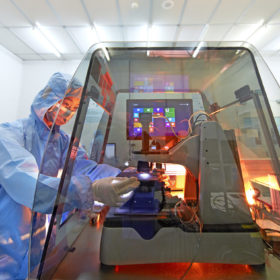
Trina Solar achieves 24.5% efficiency for 210 mm p-type PERC solar cell
Trina Solar said the State Key Laboratory of PV Science and Technology in China has confirmed the efficiency rating of its latest solar panel.

REC Group secures EU funding for HJT solar factory in France
REC Solar has announced plans for a PV module gigafactory in France, along with 17 other clean tech projects that will share €1.8 billion ($1.8 billion) of grants from the European Union’s Innovation Fund.

pv magazine Roundtables: Videos on solar everywhere, PV manufacturing trends, risk sharing in PPA markets, and green hydrogen
On day two of the pv magazine Roundtables Europe event, we focused on minimizing land competition for PV with dual use applications, how high efficiency n-type cells are progressing toward large-scale manufacturing at competitive cost, PV module design choices, how unsubsidized power purchase agreements can adapt and evolve, and the determining conditions for solar-plus-storage and solar-plus-hydrogen business models, among other key PV issues. The last five sessions are now available to view on demand.
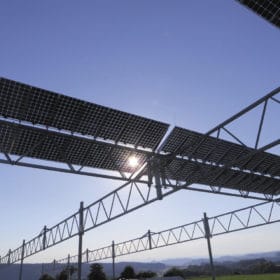
New method to evaluate performance, LCOE of elevated agrivoltaics
Scientists in Belgium have developed a way to assess elevated agrivoltaic projects, by calculating key performance indicators such as energy yield and levelized cost of energy (LCOE). They have found that shade-tolerant crops such as potatoes could potentially be paired with around 1,290 GW of PV capacity in Europe.
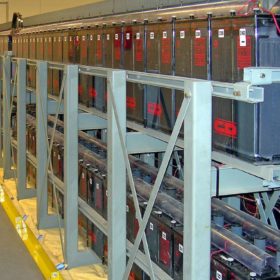
The real value of energy storage
An international research team has developed a new way to evaluate the economic value of energy storage technologies. They went beyond pure cost assumptions to consider the benefits that such technologies could bring to energy systems.
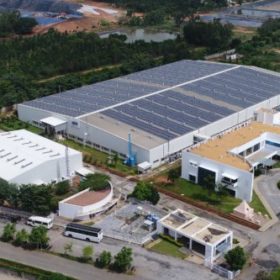
India’s Emmvee eyes wafer-to-module production
India’s Emmvee Photovoltaic has a 1.25 GW module manufacturing facility that can produce polycrystalline and mono PERC solar panels, with the ability to upgrade to TOPCon. By the end of 2023, it plans to raise its PV module capacity to 3 GW.
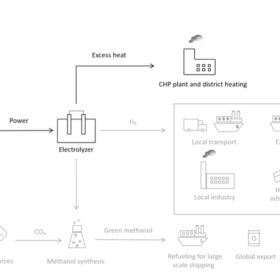
Waste heat from hydrogen production for district heating
The use of waste heat from hydrogen production in district heating could increase the attractiveness of green hydrogen, according to new research from Sweden.
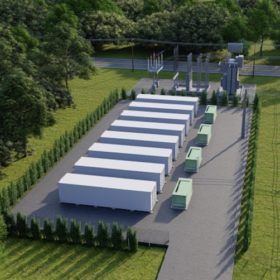
Equinor acquires US energy storage developer
Battery storage is key to Equinor’s strategy of supporting its portfolio of offshore wind and upstream oil and gas, as well as future opportunities in the hydrogen and renewables space.
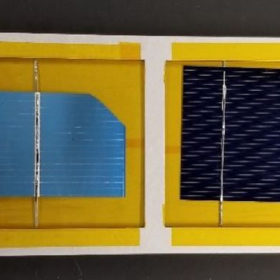
Role of UV in solar cell degradation
US scientists have tested a range of modern cell designs under strong ultraviolet light and have found that many of them, including p-type PERC and n-type heterojunction cells, are more susceptible to degradation than older back surface field designs. They noted that the rear side of bifacial cells may be particularly vulnerable.
